December 25 – Nativity of Our Lord Jesus Christ
St. Isidore1 recounts that the eagle received its name due to its keen vision – aquila, from acumen oculorum, in Latin. He also mentions that the bird stares at the sun’s rays without closing its eyes and holds its young so as to expose them to this radiance, considering those who keep their eyes open worthy and abandoning those who blink, as they are a disgrace to their species.
These intriguing etymological reflections come to mind, by association of ideas, when we read the prologue to the Gospel of St. John, proclaimed in the Liturgy at the Mass of the Nativity of the Lord during the Day. The penetrating vision with which this sublime hymn begins prompts St. Irenaeus of Lyon2 to attribute precisely the allegory of the eagle to its author.
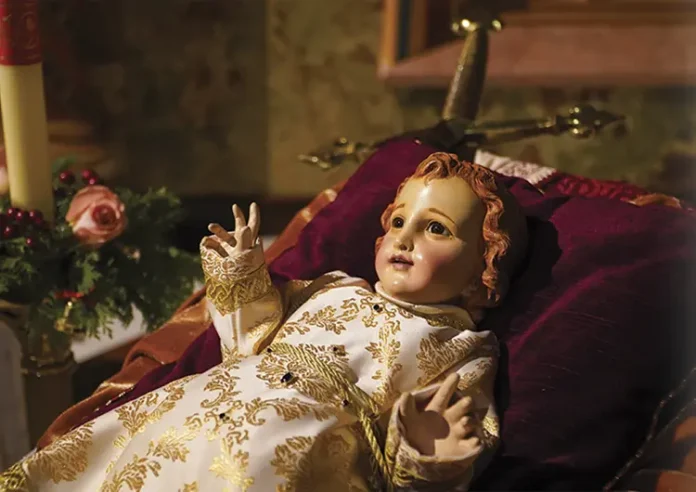
In fact, at the opening of his Gospel, the Beloved Disciple – as the worthy bearer of the aquiline symbol – directs his gaze directly to the divinity of the “Sun of Justice” (Mal 4:2), Jesus Christ Our Lord. And he announces that this Child, the Son of Mary contemplated today at His Nativity, is the Divine Word who, existing before the centuries of human history, created all things (cf. Jn 1:1-3).
In the following verses, St. John masterfully summarizes the themes of his Gospel, among which stands out one that is rarely commented on at Christmas. It would seem that, just as the eagle subjects its young to a test by exposing them to the sun, he also wants all his listeners to turn their admiring gaze to contemplate the divine light.
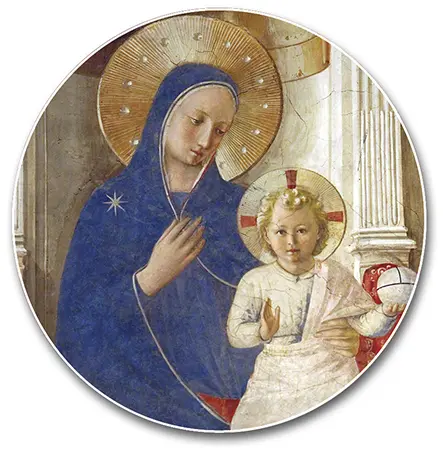
In fact, the Virgin Apostle is the only Evangelist who begins his account by narrating that Jesus’ coming into the world caused a conflict. Yes, around this gentle Child, who out of love “became flesh and made His dwelling among us” (1:14), a radical antagonism took shape: light and darkness (cf. Jn 1:5); Jesus and the world (cf. Jn 1:10); faith and unbelief (cf. Jn 1:7); those who believe and welcome Him receive divine life and heavenly glory, becoming children of God (cf. Jn 1:12), while those who reject Him remain in darkness and eternal death. This is the tragic and grandiose choice that St. John presents in this hymn, from which we cannot avert our gaze.
Such considerations may undoubtedly seem unpleasant in a Christmas celebration. But in the current religious and moral crisis that the world and especially the Church are suffering, can we fail to see this reality?
Will we be children of light or of darkness? This is a key decision for our eternal destiny.
Faced with this prospect, no one has the right to despair or lose heart, for with Mary Most Holy as our intercessor, we will receive abundant graces to welcome the ineffable light of the Child Jesus and thus participate in His Kingdom of love for ever and ever. ◊
Notes
1 Cf. ST. ISIDORE OF SEVILLE. Etimologías. L.XII, c.7, n.10-11. Madrid: BAC, 2004, p.939.
2 Cf. ST. IRENAEUS OF LYON. Contre les hérésies. L.III, c.11, n.8: SC 211, 165.