Third Sunday of Advent (Gaudete Sunday)
On this Sunday, the Catholic Liturgy offers the faithful a joyful pause from the penitential note of Advent. Vestments are rose-coloured, the Gloria is sung, and flowers decorate the altar. Gaudete, the first word of the entrance antiphon of the Mass, means “Rejoice”. It is taken from the Letter of St. Paul to the Philippians, “Rejoice in the Lord always; again I will say, Rejoice” (Phil 4:4).
Mass Readings
First Reading – Is 35:1-6a, 10
The desert and the parched land will exult; the steppe will rejoice and bloom. They will bloom with abundant flowers, and rejoice with joyful song. The glory of Lebanon will be given to them, the splendor of Carmel and Sharon; they will see the glory of the LORD, the splendor of our God. Strengthen the hands that are feeble, make firm the knees that are weak, say to those whose hearts are frightened: Be strong, fear not! Here is your God, He comes with vindication; with divine recompense He comes to save you. Then will the eyes of the blind be opened, the ears of the deaf be cleared; then will the lame leap like a stag, then the tongue of the mute will sing. Those whom the LORD has ransomed will return and enter Zion singing, crowned with everlasting joy; they will meet with joy and gladness, sorrow and mourning will flee.
Responsorial Psalm – Ps 146:6-7, 8-9, 9-10. (R. cf. Is 35:4)
R. Lord, come and save us.
or:
R. Alleluia.
The LORD God keeps faith forever,
secures justice for the oppressed,
gives food to the hungry.
The LORD sets captives free. R.
The LORD gives sight to the blind;
the LORD raises up those who were bowed down.
The LORD loves the just;
the LORD protects strangers. R.
The fatherless and the widow He sustains,
but the way of the wicked He thwarts.
The LORD shall reign forever;
your God, O Zion, through all generations. R.
Second Reading – Jas 5:7-10
Be patient, brothers and sisters, until the coming of the Lord. See how the farmer waits for the precious fruit of the earth, being patient with it until it receives the early and the late rains. You too must be patient. Make your hearts firm, because the coming of the Lord is at hand. Do not complain, brothers and sisters, about one another, that you may not be judged. Behold, the Judge is standing before the gates. Take as an example of hardship and patience, brothers and sisters, the prophets who spoke in the name of the Lord.
Gospel – Mt 11:2-11
When John the Baptist heard in prison of the works of the Christ, he sent his disciples to Jesus with this question, “Are you the one who is to come, or should we look for another?” Jesus said to them in reply, “Go and tell John what you hear and see: the blind regain their sight, the lame walk, lepers are cleansed, the deaf hear, the dead are raised, and the poor have the good news proclaimed to them. And blessed is the one who takes no offense at Me.” As they were going off, Jesus began to speak to the crowds about John, “What did you go out to the desert to see? A reed swayed by the wind? Then what did you go out to see? Someone dressed in fine clothing? Those who wear fine clothing are in royal palaces. Then why did you go out? To see a prophet? Yes, I tell you, and more than a prophet. This is the one about whom it is written: Behold, I am sending my messenger ahead of you; he will prepare your way before you. Amen, I say to you, among those born of women there has been none greater than John the Baptist; yet the least in the kingdom of heaven is greater than he.”
Featured Saints
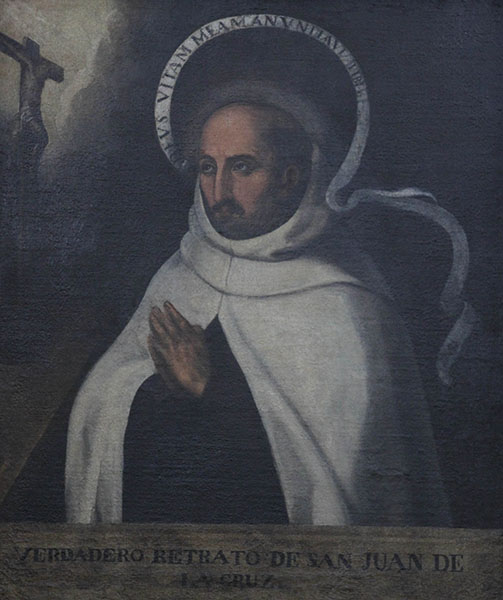
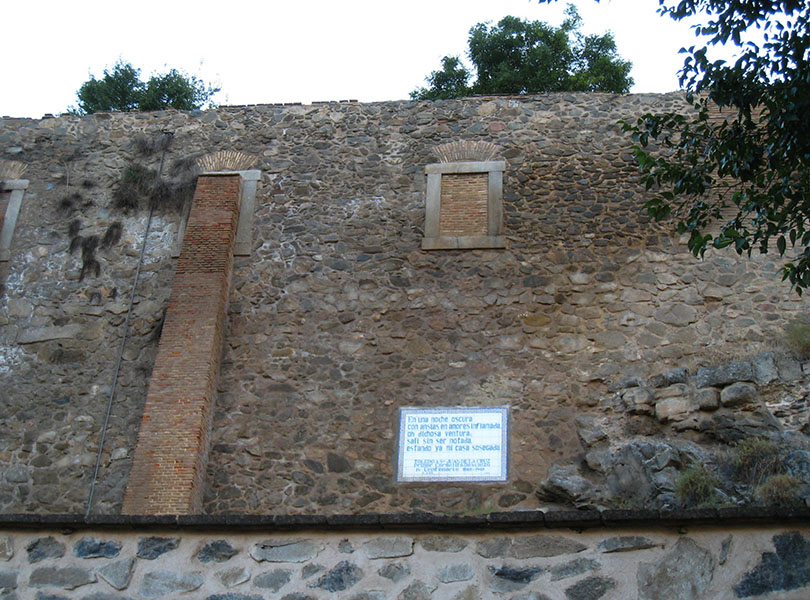
Sunday has precedence over the Memorial of St. John of the Cross, priest and doctor of the Church. Reformer of the Carmelite order, together with St. Teresa of Avila. A great master of the spiritual life and mystical writer.
St. Venantius Fortunatus, bishop (†seventh century). Famous troubador of his epoch, he was inspired by the virtues of Queen St. Radegonde, became a priest and went to Poitiers, where he became bishop. He composed hymns to the Holy Cross of Our Lord Jesus Christ and wrote the epopees of many saints.
St. Nicasius of Rheims, bishop (†407). He was killed by pagans in the doorway of the basilica he had built in Rheims, France.
St. Nimatullah al-Hardini Kassab, priest (†1858). Religious from the Lebanese Maronite Order, he dedicated himself to theological studies, the formation of youth and other pastoral efforts.
Blessed Bonaventure of Pistoia, priest (†circa 1315). Prior of several monasteries of the Order of the Servants of Mary; he helped St. Philip Benizi quell feuding factions in many Italian cities.
Blessed Frances Schervier, virgin (†1876). Known as the “Mother of the Poor,” she founded the Congregation of theSisters of the Poor of St. Francis in Aachen, Germany.
Sts. Heron, Arsenius, Isidore and Dioscurus, martyrs (†250). Sentenced to death in Alexandria, Egypt, during the persecution of Decius. Seeing the first three suffer various tortures with the same constancy in the Faith, the judge had them thrown into a furnace; St. Dioscurus, only twelve years old, died after being subjected to numerous scourgings.
Image gallery