
History is life’s teacher – as the ancients1 rightly said. Especially if we consider history not as a mere succession of facts, but from a higher perspective, as “the journey of humanity and the entire universe towards the goal for which they were created”2 by God.
This journey, from the moment Satan fell from Heaven like lightning (cf. Lk 10:18) and sin entered the world (cf. Rom 5:12), consists essentially of an immense struggle between good and evil. In fact, all the events that have defined the destiny of humanity, on a universal or individual level, have been either triumphs of virtue, in the fulfilment of divine plans, or successes of iniquity, through the perfidy of the devil.
Considering, then, what the wisdom of the past has to teach us from this perspective, we can understand what artifices hell uses to advance its plan of disorder, as well as know the weapons needed by today’s militant Catholics who wish to help the Holy Church to build up the Reign of Christ and Mary on earth.
The age-old ploy of the Evil One
Setting out to analyse the centuries that preceded us, let us take as our initial example the first massive sin committed within the very ranks of Christianity.
A divider by definition, the infernal enemy knows that the condition for his success lies in dividing the good… Why is the union among them so important?
Wittenberg, 1517. A preaching friar named Martin Luther, already heavily influenced by spiritual and philosophical currents opposed to Catholicism, was outraged by supposed abuses perpetrated by the Holy Father, and committed his own abuse by nailing ninety-five theses to the door of the city’s cathedral attacking the actions and doctrine of the Church. A veritable revolution had been set in motion which, in little more than a hundred years, would end up breaking forever the union of European nations under the aegis of the Mystical Bride of Christ. Luther was condemned as a heretic; however, with the Treaty of Westphalia in 1648, Protestantism gained the title of “religion”, with official status.
A later event, with consequences that were more ideological than political, may be equally illuminating. The 18th century is called the “Age of Enlightenment,” of scientific, of great inventions, and of intellectual and material growth. However, so many new developments were hostile towards the Church’s mentality from their outset, without the Church having taken any pre-condemnatory stance against them. One would think that, since there is only one God who created both spiritual and physical realities, scientific progress would contribute to the spread and confirmation of religion. But no. Science developed separately from faith. As a result, anti-religious sentiment, scepticism, materialism and, ultimately, declared atheism took root in humanity without major obstacles.
Discord, division, and the conquest of official recognition: this is the age-old strategy used by evil to establish itself in the world. After first separating man from God – through original sin – the devil separated the spiritual from the temporal, the religious from the secular, the nobility from the people, intellectual life from moral life, piety from combativeness; and continues to do the same with countless created splendours, from the metaphysical to the most practical, such as the concept of the union between body and soul that constitutes man.
A divider by definition – for the name devil comes from the Greek διάβολος (diábolos), which means one who divides3 – the infernal enemy knows that the condition for his success lies in the disintegration of good. However, what is the deeper reason for this technique? Why is the union among the good so important that, once broken, it causes their ruin? A look at the theology of creation will shed light on the subject.
Harmony in multiplicity
While there are many realities unimaginable to the limited human mind, few are so in such a special way as the blessed moment when the Divine Architect decided to create all things out of nothing and begin the work par excellence, whose perfection is merely reflected in the art forms invented by man. The Most Blessed Trinity produced such a great marvel “in order that His goodness might be communicated to creatures, and be represented by them,”4 says St. Thomas Aquinas.
In the immense whole of the universe, all creatures unite to form a complete representation of the Divine Craftsman
This occurs in two ways. The first happens at the individual level, for each being, however small, reflects God in its own particular manner. But it also reflects God as part of the immense whole of the universe, in which all creatures unite to form a complete representation of the One who made them.
On this second point, theology explains that divine perfections are infinite and immense, and could not be represented satisfactorily by a single creature. These perfections, therefore, which are one in God, are reflected in created beings in multiple and distinct ways,5 like a ray of light refracted into the different colours of the rainbow.
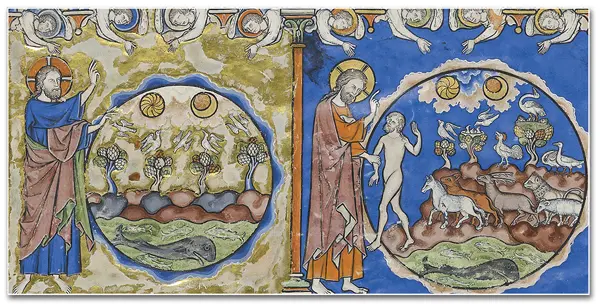
Hence, we understand the necessity of unity of beings amongst themselves and with the Creator. In this harmony, they form a great orchestra praising the magnificence of the Most High. Fragmented, they can only produce a cacophony unworthy of divine integrity. And the ancient Serpent, knowing this truth, unable to destroy God in his hatred, seeks to ruin creation, inoculating it with divisive poison at strategic points, and suffocating in it the reflections of the Almighty.
Additionally, even more than simply destroying the divine work, Satan aims to use creatures to build his own kingdom, hell on earth, as a sinister mimicry of the kingdom of holiness that the Saviour came to establish in the world. Such is the insolence of his rebellion against God.
The apex around which everything revolves
On the other hand, triumphantly overcoming the infernal deception, God’s plan is realized in history, in all its richness and fullness, by virtue of the Redemption wrought by the Incarnate Word.
Even though the unity of good was jeopardized by the sin of angels and men, Our Lord Jesus Christ restored it forever by His Blood shed on the Cross. Uniting both the human and divine natures within His Person, He reconciled all creatures with God (cf. Col 1:20) and fulfilled the mysterious divine plan of gathering in Himself all things, those in Heaven and those on earth (cf. Eph 1:9-10), as the Apostle affirms.
Creation resembles a mountain, in which there is a gradual ascent from the more earthly beings at the base to the most supernatural ones, at the peak
When speaking of the reconciliation of all beings, St. Paul refers even to the animal, vegetable and mineral natures which, according to his teaching, will at a certain moment receive the effects of redeeming grace:
“The creation was subjected to futility, not of its own will but by the will of Him who subjected it in hope; because the creation itself will be set free from its bondage to decay and obtain the glorious liberty of the children of God” (Rom 8:20-21). In the words of St. Thomas Aquinas, “in the [manifestation of] glory of the children of God, all sensible creation will obtain a certain quality of glory, according to Revelation 21:1: ‘I saw a new heaven and a new earth.’”6
The Divine Lamb is therefore the centre of the universe, the cornerstone around which everything harmoniously fits together (cf. Eph 2:20-22), and with which all beings are linked, in the proportion due to each one.
The Catholic stance par excellence
The preceding considerations make clear to us a fundamental truth that is almost always forgotten or even overlooked: Catholics need to know how to discern and maintain the relationship of all beings with Christ, and in this sense they must be unitive and harmonious par excellence. Not in a promiscuous fashion, embracing truth and error, virtue and sin equally, but integrally, preserving the unum of good from the snares of hell, as St. Paul teaches us once again:
“Do not be mismated with unbelievers. For what partnership have righteousness and iniquity? Or what fellowship has light with darkness?” (2 Cor 6:14).
Naturally, this much-needed Christocentric stance involves a hierarchy, for the arbitrary agglutination of many good things is nothing more than a diversified form of disorder… Speaking to his spiritual children about how the most basic realities grasped by man lead him, gradually and healthily, to higher considerations, Dr. Plinio Corrêa de Oliveira7 develops a metaphor that fits our case very well.
The unity of creation, he says, resembles a mountain, formed at its base by an interlinking chain of creatures whose connection with God is more rudimentary, since they are more earthly than heavenly; in the middle, progressively, by chains of increasingly higher creatures; and at the top by the most supernatural layer of the universe, which has a close relationship with the Holy Trinity. All of these interlinking chains form a single hierarchically harmonious whole.
Since the adorable Person of Our Lord Jesus Christ is the “peak” of the mountain of creation – and here we apply the above metaphor – the Christian needs to know how to order his life, and the life of the society in which he is inserted, in a hierarchy of values that has the Redeemer as the rule and measure for everything; that is, always giving precedence to that which has the greatest connection with Him and, ultimately, uniting all things under this rule, in a healthy harmony.
The perfect model of this attitude is the Holy Catholic Church. There is no aspect of human life upon which she has not applied her maternal care, from the highest needs for sanctification to the most poignant miseries to which man is subject. Without being a philanthropic institution, she has always been the refuge and provider of the poor; without being a clinic, she founded hospitals and maintained countless of them; without being an academy, she became the great propagator of universities and educational institutions; And in all this, as an exemplary fulfiller of Christ’s mandate (cf. Lk 12:31), she always sought first and foremost to bring souls closer to the Kingdom of God and to His justice, dispensing with the rest as mere additions.
Our Lord Jesus Christ is the “peak” of the mountain of creation, and Christians must order their lives and their society with Him as the rule
To make these considerations even clearer, let us imagine: what would the world be like if everyone practised the Ten Commandments? What generation of men would be formed if teachers in schools sought to educate not only minds for future professional challenges, but above all souls for the battle of sanctification? What splendour would the arts attain if, in addition to delighting the senses, they expressed to the spirits something of the beauty of God? What would architecture be like if, sheltering not just rational beings, but baptized souls, it led them to dignified conduct and their thoughts to heavenly realities?
This would happen if humanity were authentically Roman Catholic, for a soul formed in this way expresses Christianity in everything it does. That supreme and genuine harmony that God had in mind when creating all things from nothing – a harmony for which our soul yearns, often without even realizing it – would be established in the universe.
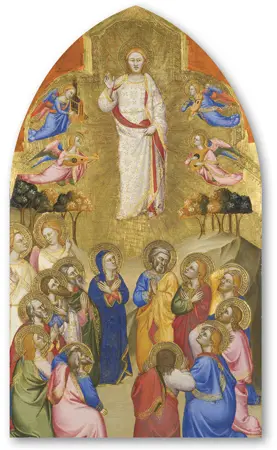
The reign of peace will be established!
This latent yearning, however, will not vanish into nothingness. The reign of Christian peace is not utopian like the purported victory of evil. On the contrary, through the infinite merits of the Saviour and the intercession of Mary Most Holy, Sovereign Queen of the Universe, it will be established on earth, perhaps in the not-too-distant future.
If, therefore, the devil works diligently, “in great wrath, because he knows that his time is short” (Rv 12:12), let us not be less diligent in building the Kingdom Christ and, as worthy children of harmony, let us fight without ceasing so that God’s will may be fulfilled soon and permanently, “on earth as it is in Heaven.” ◊
Notes
1 Cf. CICERO, Marcus Tullius. De oratore. L.II, n.36.
2 CORRÊA DE OLIVEIRA, Plinio. Conference. São Paulo, 17/1/1967.
3 Cf. GARCÍA SANTOS, Amador Ángel. Diccionario del griego bíblico. Estella: Verbo Divino, 2011, p.198.
4 ST. THOMAS AQUINAS. Summa Theologiæ. I, q.47, a.1.
5 “Because His goodness could not be adequately represented by one creature alone, He produced many and diverse creatures, that what was wanting to one in the representation of the divine goodness might be supplied by another. For goodness, which in God is simple and uniform, in creatures is manifold and divided and hence the whole universe together participates the divine goodness more perfectly, and represents it better than any single creature whatever” (Idem, ibidem).
6 ST. THOMAS AQUINAS. Super Epistolam ad Romanos expositio, c.II, lect.4.
7 Cf. CORRÊA DE OLIVEIRA, Plinio. Conference. São Paulo, 10/1/1981.