Friday of the 2nd Week in Ordinary Time
Mass Readings
First Reading – 1 Sam 8:4-7, 10-22a
All the elders of Israel came in a body to Samuel at Ramah and said to him, “Now that you are old, and your sons do not follow your example, appoint a king over us, as other nations have, to judge us.” Samuel was displeased when they asked for a king to judge them. He prayed to the LORD, however, who said in answer: “Grant the people’s every request. It is not you they reject, they are rejecting me as their king.” Samuel delivered the message of the LORD in full to those who were asking him for a king. He told them: “The rights of the king who will rule you will be as follows: He will take your sons and assign them to his chariots and horses, and they will run before his chariot. He will also appoint from among them his commanders of groups of a thousand and of a hundred soldiers. He will set them to do his plowing and his harvesting, and to make his implements of war and the equipment of his chariots. He will use your daughters as ointment makers, as cooks, and as bakers. He will take the best of your fields, vineyards, and olive groves, and give them to his officials. He will tithe your crops and your vineyards, and give the revenue to his eunuchs and his slaves. He will take your male and female servants, as well as your best oxen and your asses, and use them to do his work. He will tithe your flocks and you yourselves will become his slaves. When this takes place, you will complain against the king whom you have chosen, but on that day the LORD will not answer you.” The people, however, refused to listen to Samuel’s warning and said, “Not so! There must be a king over us. We too must be like other nations, with a king to rule us and to lead us in warfare and fight our battles.” When Samuel had listened to all the people had to say, he repeated it to the LORD, who then said to him, “Grant their request and appoint a king to rule them.”Brothers and sisters: Every high priest is taken from among men and made their representative before God, to offer gifts and sacrifices for sins. He is able to deal patiently with the ignorant and erring, for he himself is beset by weakness and so, for this reason, must make sin offerings for himself as well as for the people. No one takes this honor upon himself but only when called by God, just as Aaron was. In the same way, it was not Christ who glorified himself in becoming high priest, but rather the one who said to Him: You are my Son: this day I have begotten you; just as he says in another place, You are a priest forever according to the order of Melchizedek. In the days when He was in the Flesh, He offered prayers and supplications with loud cries and tears to the one who was able to save Him from death, and he was heard because of his reverence. Son though He was, He learned obedience from what He suffered; and when He was made perfect, He became the source of eternal salvation for all who obey Him.
Responsorial Psalm – Ps 89:16-17, 18-19 (R. 4b)
R. Forever I will sing the goodness of the Lord.
Blessed the people who know the joyful shout;
in the light of your countenance, O LORD, they walk.
At your name they rejoice all the day,
and through your justice they are exalted.R.
For you are the splendor of their strength,
and by your favor our horn is exalted.
For to the LORD belongs our shield,
and to the Holy One of Israel, our King.R.
Gospel – Mk 2:1-12
When Jesus returned to Capernaum after some days, it became known that he was at home. Many gathered together so that there was no longer room for them, not even around the door, and he preached the word to them. They came bringing to him a paralytic carried by four men. Unable to get near Jesus because of the crowd, they opened up the roof above him. After they had broken through, they let down the mat on which the paralytic was lying. When Jesus saw their faith, he said to him, “Child, your sins are forgiven.” Now some of the scribes were sitting there asking themselves, “Why does this man speak that way? He is blaspheming. Who but God alone can forgive sins?” Jesus immediately knew in his mind what they were thinking to themselves, so he said, “Why are you thinking such things in your hearts? Which is easier, to say to the paralytic, ‘Your sins are forgiven,’ or to say, ‘Rise, pick up your mat and walk’? But that you may know that the Son of Man has authority to forgive sins on earth” –he said to the paralytic, “I say to you, rise, pick up your mat, and go home.” He rose, picked up his mat at once, and went away in the sight of everyone. They were all astounded and glorified God, saying, “We have never seen anything like this.”
Featured Saints
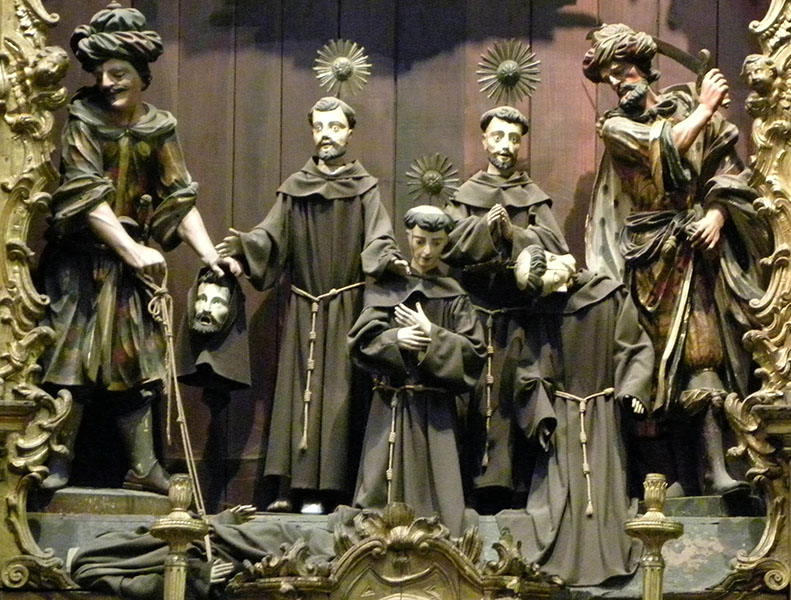
Sts. Berardo, Ottone and Pietro, priests, Accursius and Adjutus, religious (†1226). Protomartyrs of the Franciscan Order. Sent by the founder to evangelize the Saracens of Spain, they were imprisoned, deported to Morocco and beheaded.
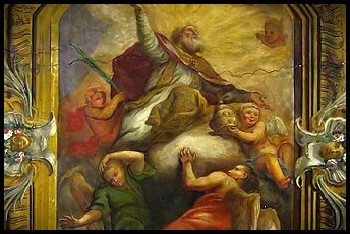
St. Marcellus I, Pope (†309). St. Damasus called him a true shepherd. He restored ecclesial discipline, built new churches and consecrated new bishops. He died in exile.
St. Melas, bishop (†circa 390). Bishop of Rhinocorura, Egypt, he was condemned to exile under Arian Emperor Valens.
St. Honoratus of Arles, bishop (†429). Founded the famous Abbey of Lerins (France). Elected Bishop of Arles, he died after three years of arduous pastoral work.
St. Joseph Vaz, priest (†1711). Indian missionary from the Congregation of the Oratory, in present day Sri Lanka. He translated the Gospel into the Tamil and Sinhalese dialects.
St. Leobatius, abbot (†fifth century). He was designated by his master St. Ursus as superior of the monastery of Sennevière in Tours, France.
St. Jane of Bagno di Romagna, virgin (†1105). Camaldolese nun in the monastery of St. Lucy, near Bagno di Romagna, Italy.
Blessed Joana Maria Condesa Lluch, virgin (†1916). Foundress of the Congregation of the Handmaids of the Immaculate Conception, Protectress of Workers in Valencia, Spain.
Image gallery