Memorial of St. Anthony, Abbot
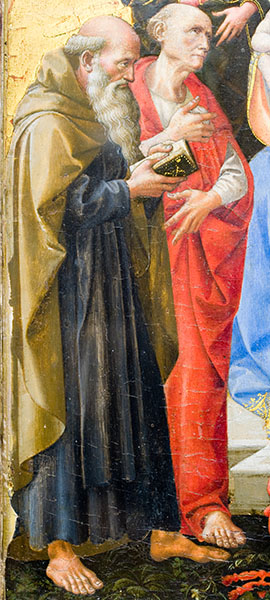
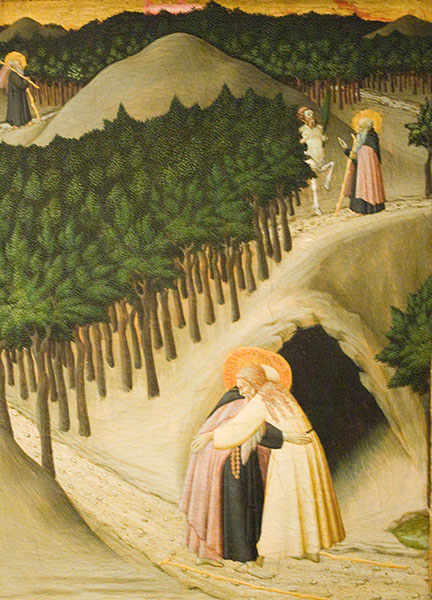
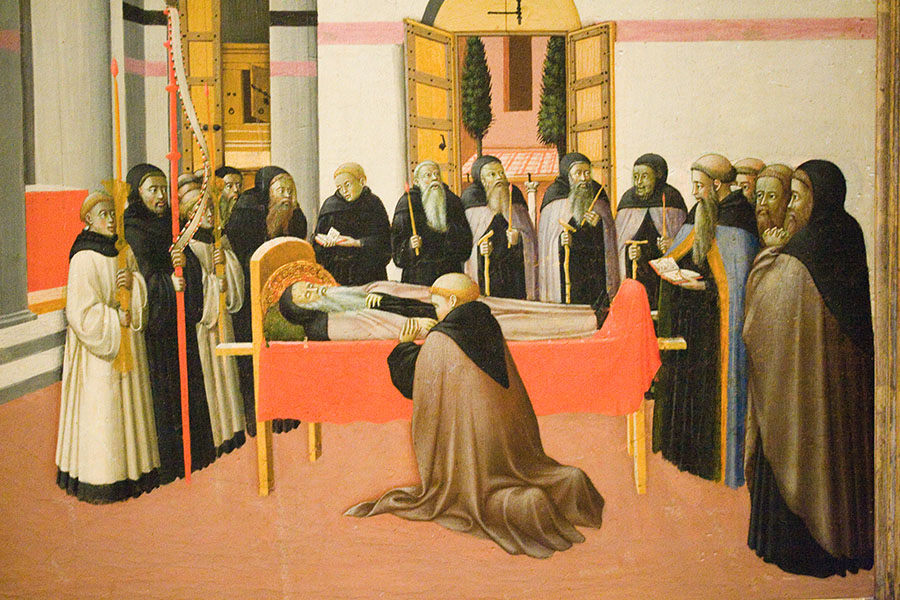
St. Anthony of Egypt, abbot. Great patriarch and master of monastic life. He began to live as an anchorite at the age of 20, in the regions outlying his native village and later took up his abode in increasingly remote locations in the desert. The fame of his extraordinary life spread, influencing many other souls to follow a similar path. He was a victorious against the attacks of the devil until his death in 356, at the age of 105. His most eminent biographer was St. Athanasius.
See also:
Mass Readings
First Reading – 1 Sm 9:1-4, 17-19; 10:1
There was a stalwart man from Benjamin named Kish, who was the son of Abiel, son of Zeror, son of Becorath, son of Aphiah, a Benjaminite. He had a son named Saul, who was a handsome young man. There was no other child of Israel more handsome than Saul;
he stood head and shoulders above the people. Now the asses of Saul’s father, Kish, had wandered off. Kish said to his son Saul, “Take one of the servants with you and go out and hunt for the asses.” Accordingly they went through the hill country of Ephraim, and through the land of Shalishah. Not finding them there, they continued through the land of Shaalim without success. They also went through the land of Benjamin, but they failed to find the animals. When Samuel caught sight of Saul, the LORD assured him, “This is the man of whom I told you; he is to govern my people.” Saul met Samuel in the gateway and said, “Please tell me where the seer lives.” Samuel answered Saul: “I am the seer. Go up ahead of me to the high place and eat with me today. In the morning, before dismissing you, I will tell you whatever you wish.” Then, from a flask he had with him, Samuel poured oil on Saul’s head; he also kissed him, saying: “The LORD anoints you commander over his heritage. You are to govern the LORD’s people Israel, and to save them from the grasp of their enemies roundabout. “This will be the sign for you that the LORD has anointed you commander over his heritage.”
Responsorial Psalm – Ps 144:1b, 2, 9-10 (R.2a)
R. Lord, in your strength the king is glad.
O LORD, in your strength the king is glad;
in your victory how greatly he rejoices!
You have granted him his heart’s desire;
you refused not the wish of his lips. R.
For you welcomed him with goodly blessings,
you placed on his head a crown of pure gold.
He asked life of you: you gave him
length of days forever and ever. R.
Great is his glory in your victory;
majesty and splendor you conferred upon him.
For you made him a blessing forever;
you gladdened him with the joy of your face. R.
Gospel – Mk 2:13-17
Jesus went out along the sea. All the crowd came to him and he taught them. As he passed by, he saw Levi, son of Alphaeus, sitting at the customs post. Jesus said to him, “Follow me.” And he got up and followed Jesus. While he was at table in his house, many tax collectors and sinners sat with Jesus and his disciples; for there were many who followed him. Some scribes who were Pharisees saw that Jesus was eating with sinners and tax collectors and said to his disciples, “Why does he eat with tax collectors and sinners?”
Jesus heard this and said to them, “Those who are well do not need a physician, but the sick do. I did not come to call the righteous but sinners.”
Featured Saints
St. Marcellus, bishop (†510). Of the Dioceses of Die, France. He was exiled by the Arian king, Eurico.
St. Sulpicius the Pious, bishop (†647). Bishop of Bourges, France, admirable for his generosity, especially with the poor and the sick, and the austerity of his private life. He is known to have converted all the inhabitants of his diocese with his inspiring example of holiness.
Blessed Gamelbert, priest (†circa 802). A wealthy young man, he was ordained priest and successfully combined pastoral ministry with hermetic life. He gave all his possessions to found the monastery of Metten, Germany.
St. Januarius Sánchez Delgadillo, priest and martyr (†1927). Promoted religious instruction of children; killed during the anti-Christian persecution in Mexico.
St. Rosalina, virgin (†1329). From a French noble family, she renounced a favourable marriage and became a Carthusian nun and eventually the prioress of the Chartreuse of CelleRoubaud, in Provence, France, excelling in abnegation and austerity.
Image gallery