Friday of the 3rd Week in Ordinary Time
Mass Readings
First Reading – 2 Sam 11:1-4a, 5-10a, 13-17
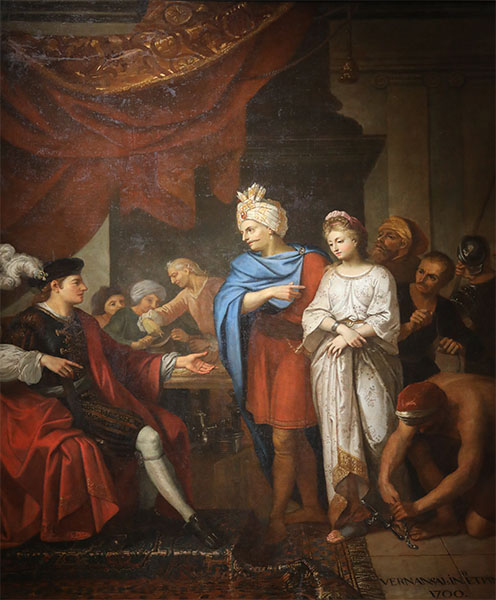
At the turn of the year, when kings go out on campaign, David sent out Joab along with his officers and the army of Israel, and they ravaged the Ammonites and besieged Rabbah. David, however, remained in Jerusalem. One evening David rose from his siesta and strolled about on the roof of the palace. From the roof he saw a woman bathing, who was very beautiful. David had inquiries made about the woman and was told, “She is Bathsheba, daughter of Eliam, and wife of Joab’s armor bearer Uriah the Hittite.” Then David sent messengers and took her. When she came to him, he had relations with her. She then returned to her house. But the woman had conceived, and sent the information to David, “I am with child.” David therefore sent a message to Joab, “Send me Uriah the Hittite.” So Joab sent Uriah to David. When he came, David questioned him about Joab, the soldiers, and how the war was going, and Uriah answered that all was well. David then said to Uriah, “Go down to your house and bathe your feet.” Uriah left the palace, and a portion was sent out after him from the king’s table. But Uriah slept at the entrance of the royal palace with the other officers of his lord, and did not go down to his own house. David was told that Uriah had not gone home. On the day following, David summoned him, and he ate and drank with David, who made him drunk. But in the evening Uriah went out to sleep on his bed among his lord’s servants, and did not go down to his home. The next morning David wrote a letter to Joab which he sent by Uriah. In it he directed: “Place Uriah up front, where the fighting is fierce. Then pull back and leave him to be struck down dead.” So while Joab was besieging the city, he assigned Uriah to a place where he knew the defenders were strong. When the men of the city made a sortie against Joab, some officers of David’s army fell, and among them Uriah the Hittite died.
Responsorial Psalm – Ps 51:3-4, 5-6a, 6bcd-7, 10-11 (R. see 3a)
R. Be merciful, O Lord, for we have sinned.
Have mercy on me, O God, in your goodness;
in the greatness of your compassion wipe out my offense.
Thoroughly wash me from my guilt
and of my sin cleanse me. R.
For I acknowledge my offense,
and my sin is before me always:
“Against you only have I sinned,
and done what is evil in your sight.”R.
I have done such evil in your sight
that you are just in your sentence,
blameless when you condemn.
True, I was born guilty,
a sinner, even as my mother conceived me. R.
Let me hear the sounds of joy and gladness;
the bones you have crushed shall rejoice.
Turn away your face from my sins,
and blot out all my guilt. R.
Gospel – Mk 4:26-34-25
Jesus said to the crowds: “This is how it is with the Kingdom of God; it is as if a man were to scatter seed on the land and would sleep and rise night and day and the seed would sprout and grow, he knows not how. Of its own accord the land yields fruit, first the blade, then the ear, then the full grain in the ear. And when the grain is ripe, he wields the sickle at once, for the harvest has come.” He said, “To what shall we compare the Kingdom of God, or what parable can we use for it? It is like a mustard seed that, when it is sown in the ground, is the smallest of all the seeds on the earth. But once it is sown, it springs up and becomes the largest of plants and puts forth large branches, so that the birds of the sky can dwell in its shade.” With many such parables he spoke the word to them as they were able to understand it. Without parables he did not speak to them, but to his own disciples he explained everything in private.
Featured Saints
Blessed Columba Marmion, abbot (†1923). Native of Ireland, he was superior of the Benedictine monastery of Maredsous, Belgium, where he shone as a director of souls as well as for his spiritual doctrine and eloquence.
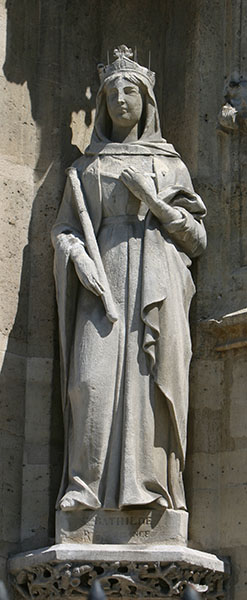
St. Bathildis, queen (†680). From the land of the Angles, she married Clovis II, King of the Franks, after whose death she served as regent until their son Clothaire III came of age to assume the throne. She then retired to the monastery of Chelles, which she had founded.
St. Matthias, Bishop of Jerusalem. († second century).
St. Thomas Khuông, priest and martyr (†1860). Dominican priest beheaded in Vietnam for declaring himself Christian during the persecution of Emperor Tu Đúc.
St. David Galvan, priest and martyr (†1915). During the Mexican persecution, he was arrested and shot without a trial, for defending the sanctity of Matrimony.
St. Adelelmus, abbot (†1097). First abbot of the Benedictine Monastery of St. John the Evangelist in Burgos, Spain, and is a patron of this city.
St. Mutien-Marie Wiaux, religious (†1917). Member of the Christian Brothers; he consecrated his life to educating youth in Namur, Belgium.
St. Adelgundis, Virgin and abbess. France, seventh century.
St. Hyacintha Mariscotti, virgem (†1640). Franciscan tertiary religious from Viterbo, Italy. After living in that state for fifteen years immersed in worldly frivolity, she embraced an austere life and went on to establish confraternities for the service of the needy and adoration of the Blessed Sacrament.
Blessed Carmen Garcia Moyon, martyr (†1937). Catechist burned alive in Torrent, Spain, during the religious persecution in the country.
Image gallery