Thursday after Epiphany
Mass Readings
First Reading – 1 Jn 4:19–5:4
Beloved, we love God because he first loved us. If anyone says, “I love God,” but hates his brother, he is a liar; for whoever does not love a brother whom he has seen cannot love God whom he has not seen. This is the commandment we have from him: Whoever loves God must also love his brother. Everyone who believes that Jesus is the Christ is begotten by God, and everyone who loves the Father loves also the one begotten by him. In this way we know that we love the children of God when we love God and obey his commandments. For the love of God is this, that we keep his commandments. And his commandments are not burdensome, for whoever is begotten by God conquers the world. And the victory that conquers the world is our faith.
Responsorial Psalm – Ps 72:1-2, 14 and 15bc, 17 (R.see 11)
R. Lord, every nation on earth will adore You.
O God, with your judgment endow the king,
and with your justice, the king’s son;
He shall govern your people with justice
and your afflicted ones with judgment. R.
From fraud and violence he shall redeem them,
and precious shall their blood be in his sight.
May they be prayed for continually;
day by day shall they bless him. R.
May his name be blessed forever;
as long as the sun his name shall remain.
In him shall all the tribes of the earth be blessed;
all the nations shall proclaim his happiness. R.
Gospel – Lk 4:14-22
Jesus returned to Galilee in the power of the Spirit, and news of him spread throughout the whole region. He taught in their synagogues and was praised by all. He came to Nazareth, where he had grown up, and went according to his custom into the synagogue on the sabbath day. He stood up to read and was handed a scroll of the prophet Isaiah. He unrolled the scroll and found the passage where it was written: The Spirit of the Lord is upon me, because he has anointed me to bring glad tidings to the poor. He has sent me to proclaim liberty to captives and recovery of sight to the blind, to let the oppressed go free, and to proclaim a year acceptable to the Lord. Rolling up the scroll, he handed it back to the attendant and sat down, and the eyes of all in the synagogue looked intently at him. He said to them, “Today this Scripture passage is fulfilled in your hearing.” And all spoke highly of him and were amazed at the gracious words that came from his mouth.
Featured Saints
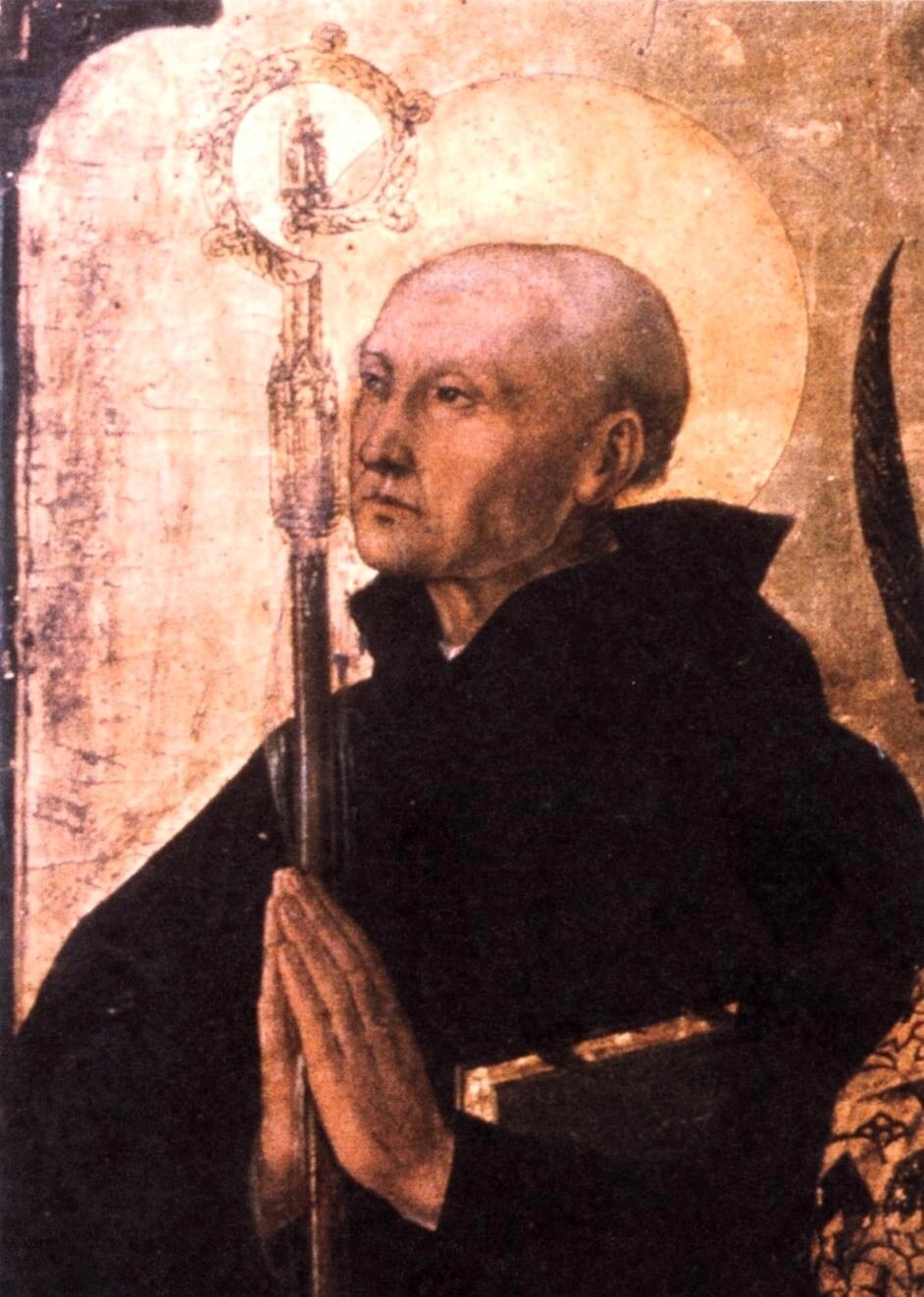
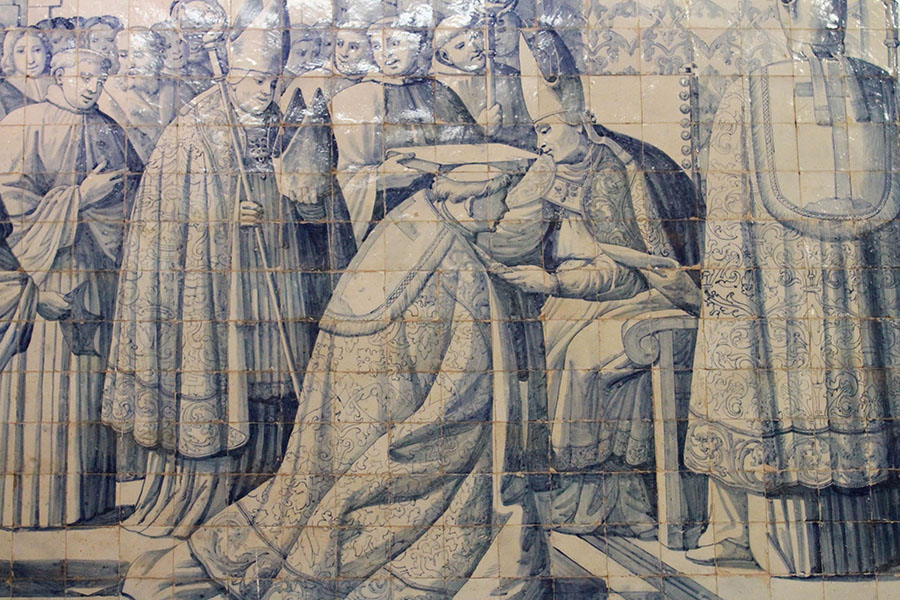
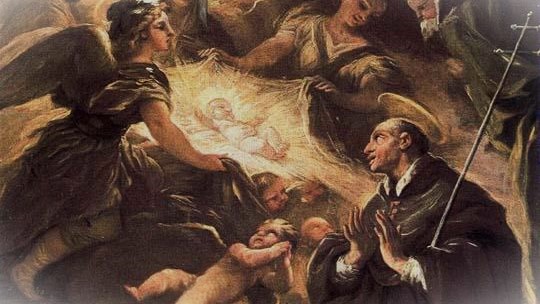
St. Lawrence Justinian, bishop (†1456). From an illustrious Venetian family, he entered the Canons regular of St. Augustine. As the first Patriarch of Venice, Italy, he enlightened his flock with the doctrine of Eternal Wisdom.
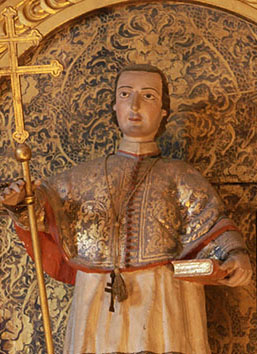
St. Apollinaris, bishop (†second century). Author of several works against heresies and of an apology of the Christian Faith, dedicated to Emperor Marcus Aurelius.
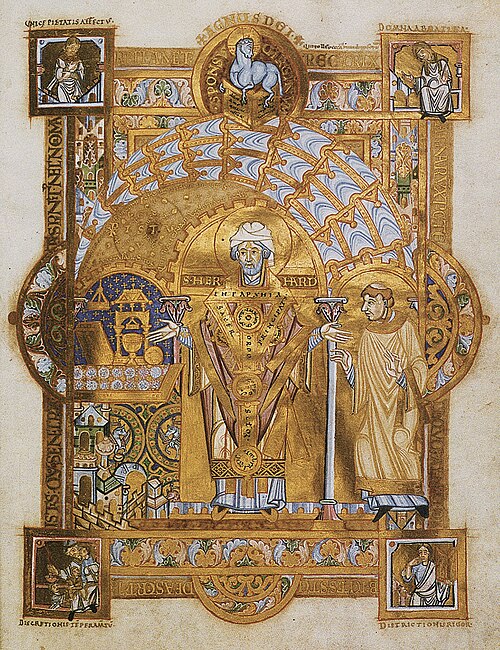
St. Erhard, bishop (†707). Native of Scotland, he preached the Gospel and exercised his Episcopal ministry in Ratisbon, Germany.
St. Severinus, priest and monk (†circa 482). Reorganized the region of Noricum (present day Austria), devastated by the Huns. He reformed customs, converted unbelievers, founded monasteries and provided religious instruction.
St. George of Choziba, monk and hermit (†c. 614). Native of Cyprus, he went to live as a hermit in Choziba, near Jericho, where he founded a well-known monastery.
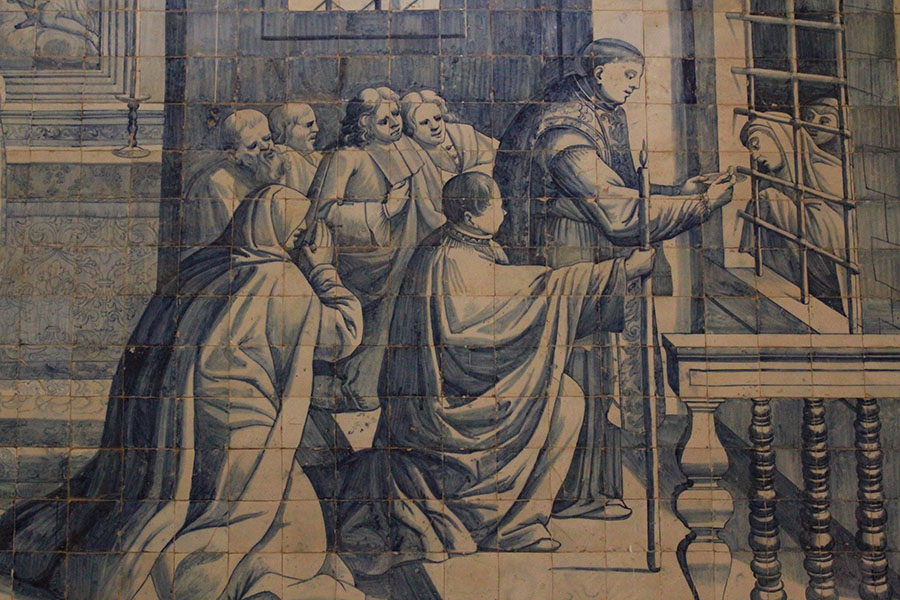
St. Gudula, virgin (†c. 712). The daughter of Count Witger and St. Amalberga. She consecrated herself to God and, from her family castle in Morazelles, lived a life of prayer and charity. She is honoured as the Patroness of Brussels, Belgium.
Blessed Edward Waterson, priest and martyr (†1593). A former Anglican who embraced the Catholic Faith and became a priest; sent on mission to England during the reign of Elizabeth I, he was imprisoned and condemned to death.
Image gallery