

Friday of the 16th Week in Ordinary Time
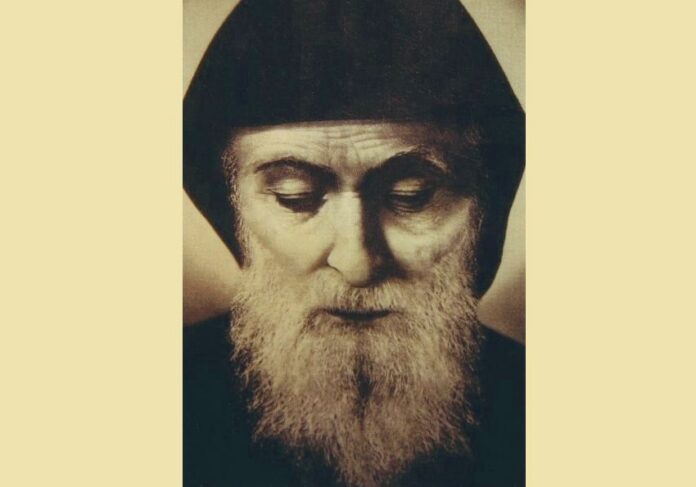
Optional memorial of St. Charbel Makhluf, priest (+1898). A Lebanese Maronite monk known for his asceticism and profound mystical life. He was later permitted to live as a solitary hermit and acquired a widespread reputation for holiness during his life.
Mass Readings
First Reading – Jer 3:14-17
Return, rebellious children, says the LORD, for I am your Master; I will take you, one from a city, two from a clan, and bring you to Zion. I will appoint over you shepherds after my own heart, who will shepherd you wisely and prudently. When you multiply and become fruitful in the land, says the LORD, They will in those days no longer say, “The ark of the covenant of the LORD!” They will no longer think of it, or remember it, or miss it, or make another. At that time they will call Jerusalem the LORD’s throne; there all nations will be gathered together to honor the name of the LORD at Jerusalem, and they will walk no longer in their hardhearted wickedness.
Responsorial Psalm – Jer 31:10, 11-12abcd, 13 (R. see 10d)
R. The Lord will guard us as a shepherd guards his flock.
Hear the word of the LORD, O nations,
proclaim it on distant isles, and say:
He who scattered Israel, now gathers them together,
he guards them as a shepherd his flock. R.
The LORD shall ransom Jacob,
he shall redeem him from the hand of his conqueror.
Shouting, they shall mount the heights of Zion,
they shall come streaming to the LORD’s blessings:
The grain, the wine, and the oil,
the sheep and the oxen. R.
Then the virgins shall make merry and dance,
and young men and old as well.
I will turn their mourning into joy,
I will console and gladden them after their sorrows. R.
Gospel – Mt 13:18-23
Jesus said to his disciples: “Hear the parable of the sower. The seed sown on the path is the one who hears the word of the Kingdom without understanding it, and the Evil One comes and steals away what was sown in his heart. The seed sown on rocky ground is the one who hears the word and receives it at once with joy. But he has no root and lasts only for a time. When some tribulation or persecution comes because of the word, he immediately falls away. The seed sown among thorns is the one who hears the word, but then worldly anxiety and the lure of riches choke the word and it bears no fruit. But the seed sown on rich soil is the one who hears the word and understands it, who indeed bears fruit and yields a hundred or sixty or thirtyfold.”
Featured Saints
Sts. Boris and Gleb, martyrs (†1015). Sons of St. Vladimir, Grand Prince of Kiev, they preferred to die than to enter into armed conflict with their brother Sviatopolk.
St. Christina, martyr (IV century)
Blessed Louise of Savoy, religious (†1503). Daughter of Blessed Amadeus, Duke of Savoy. She married Hugo, Prince of Chalon, and was widowed while still very young. She abandoned worldly honours and riches to become a Clarist under the reform of St. Colette.
Blessed Maria Mercedes Prat, virgin and martyr (†1936). Shot for being a nun during the anti-Catholic hatred of the Spanish Civil War.
St. Joseph Fernandez, priest and martyr (†1838). Dominican missionary beheaded during the reign of Emperor Minh Mang, in Nam Dinh (Vietnam).
St. Euphrasia, virgin (†fifth century). From a noble senatorial family, she withdrew to lead a hermitic life in the desert in Egypt.
St. Baldwin, abbot (†1140). Disciple of St. Bernard in the monastery of Clairvaux, he founded the Monastery of St. Matthew in Rieti, Italy.
St. Fantinus the Elder (†fourth century). Nicknamed the Wonderworker, he performed many prodigies in Tauriana, Italy.
St. Kinga (or Cunegunde) of Poland, religious (†1293). Daughter of the King of Hungary, she married the Prince of Krakow, Bolesław V , and both lived in perfect chastity. After the death of her spouse, she became a Poor Clare in the monastery she had founded.
Photo gallery


