


Anxiety gripped the NASA operations control room. For the first time, man was about to orbit the Moon! Were the calculations accurate? Had the spacecraft correctly entered lunar orbit, or was it irretrievably lost in space? At this point, it was out of communication behind the rocky satellite, and only after about fifty agonizing minutes would the operators hear the crew’s voices again.
Finally, they managed to re-establish contact. To everyone’s relief, the astronauts were safe and sound.
The day’s emotions, however, were not yet over. At the end of that Christmas Eve of 1968, William Anders, one of the members of the mission, contacted NASA headquarters in Houston: “We are now approaching lunar dawn and the Apollo 8 crew would like to send you a message.” Silence reigned in the room.
Moments later, the radios relayed the astronaut’s voice: “In the beginning, God created the heavens and the earth. The earth was without form and void, and darkness was upon the face of the deep; and the Spirit of God was moving over the face of the waters” (Gn 1:1-2). As the first chapter of Genesis was being read, several people in the control room could not contain their emotion. Scientists and astronomers could hardly believe what they were hearing.
The Apollo missions continued and, the following year, would carry man to the Moon. A milestone would be etched in the history of humanity, a huge goal achieved.
These and other similar facts may raise a reasonable question for us: what is the force responsible for impelling human beings to expend such great effort? After all, does an immense heap of scientific data justify the incalculable project taking people into outer space?
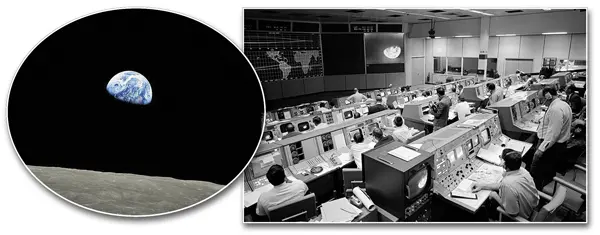
The NASA operations control room at the moment when the crew of Apollo 8 witnessed the lunar dawn; inset, photograph taken from the spaceship
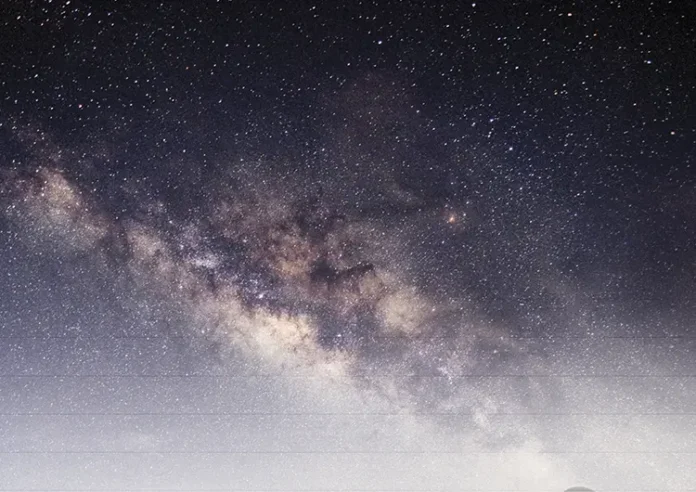
In reality, human beings seem to hold within themselves a continuous and intriguing doubt, which presents itself each time they raise their eyes to contemplate a starry sky…
Questions that have accompanied humanity
Since ancient times, humanity has debated the origin of the stars, the forces that move them, and the laws to which they are subject.
In Ancient Greece, we encounter a vast array of philosophical theories that sought answers to these questions in a variety of ways. Aristotle, the celebrated thinker of the 4th century BC, stated that men, “then advanced little by little and stated difficulties about the greater matters, e.g. about the phenomena of the moon and those of the sun and of the stars, and about the genesis of the universe.”1
With the primitive resources then available to scholars, mythology ended up being, in most cases, the most viable solution to explain such intricate questions.
But centuries passed and science progressed. As a result, new techniques for observing the stars emerged. It is clear that progress was slow: the telescope, one of the main ways of collecting astronomical information, only emerged in 1609, with Galileo Galilei.2 Even if it was a simple telescope, it was an indispensable step.
However, there was a major obstacle: the difficulties in archiving the information obtained by dint of such arduous efforts. Galileo and his contemporaries first recorded their observations in simple sketches, but reproducing the results of a study at astronomical distances on an exact scale was never an easy task. This decidedly unreliable method would persist for about two more centuries.
Only with the advent of photography was Astronomy able to advance by leaps and bounds.
From the invention of photography to the present day
In 1840, the American chemist John William Draper obtained the first successful photograph of the Moon. Forty years later, his son, Henry Draper, recorded an image of the Orion Nebula.3 Space studies gradually began to show surprising precision.
As science developed, new elements were added to its arsenal. Technological evolution allowed for a dizzying improvement in telescopes, to the point that it is now possible to determine the dimensions, distance, temperature, and composition of celestial bodies, as well as to analyse the various ranges of the electromagnetic spectrum. Meaning that, in addition to the small portion of light visible to the human eye, frequencies of radio waves, microwaves, infrared and ultraviolet radiation, X-rays, and gamma rays are also captured.4
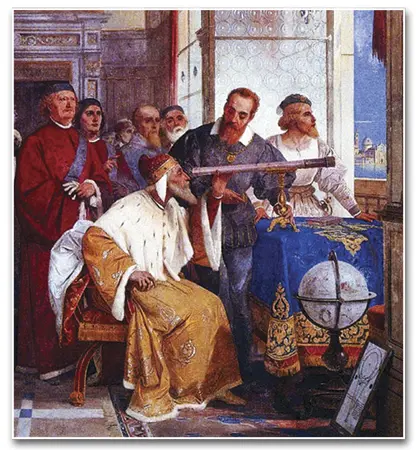
Galileo Galilei shows the Doge of Venice how to use the telescope”, by Giuseppe Bertini – Villa Andrea Ponti, Varese (Italy)
With the appearance of so many unprecedented images at the beginning of the 20th century, a controversial theory about the origin of the universe acquired more grounded arguments.
At the origin of the universe
Although it is a subject as widely publicized as it is debated, few know how to explain what the Big Bang theory really states.
The term was used pejoratively in a BBC radio program entitled The Nature of Things, by Sir Fred Hoyle, a British astronomer opposed to this theory, in 1949. Since then, the nickname has been used when referring to the theory of the expanding universe.
This scientific thesis sought to explain the beginning of the universe, that is, the appearance, at a specific moment, of all existing matter and energy. It was outlined in the first decades of the last century, based on a series of discoveries, including: Albert Einstein’s theory of relativity; Alexander Friedmann’s cosmological equations, which apply the theory of relativity to cosmology; and the explanation, by Monsignor Georges Lemaître, that the redshift of the spectrum of nebulae is due to the expansion of the universe. In 1931, this Catholic priest was the first to propose that the universe began with the explosion of a primordial atom.5
In 1965, another fact lent greater credibility to the thesis: scientists Arno Penzias and Robert Wilson accidentally discovered the existence of radiation coming from all directions of the sky. This was the cosmic microwave background, the oldest radiation in the universe, distributed throughout it with astonishing regularity.6 Now, this universal distribution of a common energy is seen as a residue of the radiation emitted in an initial explosion, the “leftover” radiation from the Big Bang itself.
There are also a series of physical laws and mathematical calculations that corroborate this theory, so that it appears today as a scientific paradigm regarding the origin of the universe. This, nevertheless remains a mystery, and its true perspective remains beyond our reach.
A divine mystery
The more we explore the universe, the more evident our smallness and ignorance become. Even after so many centuries of research and with the incredible technological advances of our time, many phenomena remain that science cannot explain. It can take us far, but our aspirations still demand something more. The truth is that we will never be satisfied just by going “far”; what we really want is to understand the first principles and causes of the realities that surround us. Deep down, we want to embrace the infinite.
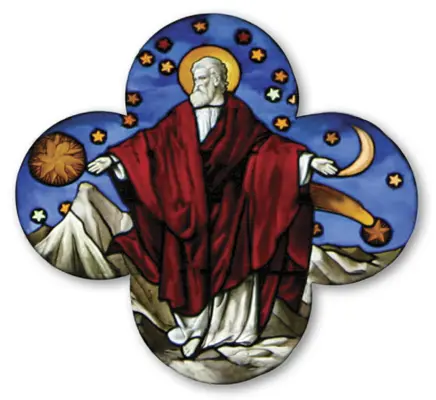
The creation of the stars – Cathedral of Bayonne, France
This dramatic reality was very well expressed by the scientist Robert Jastrow, founder and director of NASA’s Goddard Institute for Space Studies: “Currently, it seems that science will never be able to lift the veil that covers the mystery of creation. For the scientist who throughout his life has been guided by faith in the power of reason, this story ends like a nightmare.”7
However, open to the truth of God’s existence, the perplexed scientist can find the appropriate answer to his questions: “He has climbed the mountains of ignorance and is about to conquer the highest peak; when he manages to reach the last rock, he is received by a group of theologians who have been sitting there for centuries.”8
In fact, the only answer to the doubts surrounding the mysteries of creation is found in the Creator Himself, for, as Benedict XVI recalled, “It is not the elemental spirits of the universe, the laws of matter, which ultimately govern the world and mankind, but a personal God governs the stars, that is, the universe […] above everything, there is a personal will, there is a Spirit who in Jesus has revealed Himself as Love.”9
Dear reader, the study of the stars is above all an invitation to love with greater intensity the One who arranged everything with perfect order and majestic harmony. If, in contemplating the beauties of the universe, we know how to ascend to the Supreme Craftsman who created them, we will never be faced with the rebuke contained in the Book of Wisdom: “for if they had the power to know so much that they could investigate the world, how did they fail to find sooner the Lord of these things?” (13:9). ◊
Notes
1 ARISTOTLE. Metaphysics. São Paulo: Loyola, 2002, p.11.
2 Cf. RECTOR, Travis Arthur; ARCAND, Kimberly; WATZKE, Megan. Coloring the Universe. An Insider’s Look at Making Spectacular Images of Space. Fairbanks: University of Alaska, 2015, p.52.
3 Cf. Idem, ibidem.
4 Cf. Idem, p.148.
5 Cf. CABALLERO BAZA, EP, Eduardo Miguel. La teologia dell’interpretare il Big Bang secondo l’approccio del Prof. Paul Haffner. Dissertação de Licenciatura em Teologia – Pontificia Università Gregoriana: Roma, 2009, p.37.
6 Cf. CABALLERO BAZA, op. cit., p.38-39.
7 JASTROW, Robert. God and the Astronomers. New York-London: W.W. Norton & Company, 1978, p.116.
8 Idem, ibidem.
9 BENEDICT XVI. Spe salvi, n.5.


