March 15 – 4th Sunday of Lent
The 4th Sunday of Lent is called Lætare Sunday – that is, “Rejoice” – as, with more than half of this penitential season having passed, the Church provides us with a brief respite in order to anticipate the graces of the Redemption that is at hand, announced by the entrance antiphon: “Rejoice with Jerusalem, all you who love her.”
But this is a joy that we can only achieve if we align our criteria with God’s. And that is why the Liturgy invites us to be vigilant so as never to deceive ourselves, following the norms and superficialities of the world. The readings show us a very clear contrast between appearances and the truth of the heart, light and darkness, physical blindness and spiritual blindness.
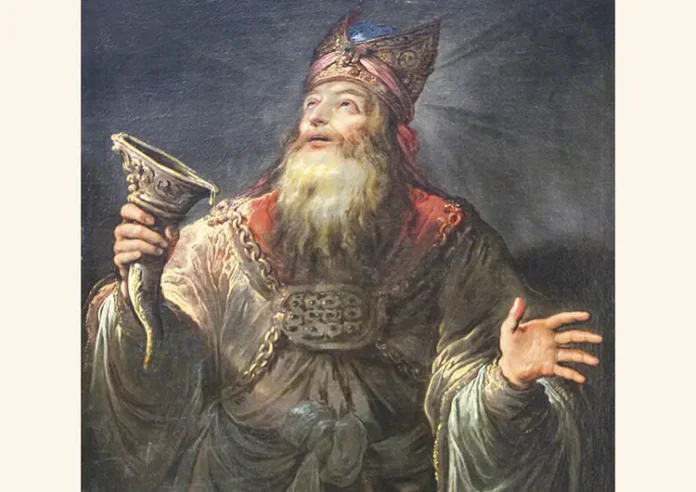
In the first reading, God wishes to educate His prophet and warns him not to focus on outward appearances, because “the Lord looks into the heart” (1 Sam 16:7). And Samuel adapts to His will.
In the second reading, St. Paul urges us to discern what pleases the Most High, unmasking the works of darkness and separating ourselves from them (cf. Eph 5:11). Only in this way will we bear fruit befitting children of light: goodness, justice, and truth (cf. Eph 5:9).
The Gospel contrasts the attitude of the Pharisees – who see the material world but perceive nothing in the supernatural realm – with that of a beggar blind from birth, to whom Our Lord not only restores physical sight but also grants spiritual sight.
In front of the people, the Pharisees knew how to surround themselves with a halo of apparent virtue and justice that did not correspond to their interior, a stratagem that blinded their hearts and prevented them from adapting to divine criteria. Thus, they end up judging the miracles performed by Our Lord as transgressions against Mosaic Law (cf. Jn 9:16).
The man blind from birth, on the contrary, thanks to the uprightness of his heart, defends the One who healed him and gives courageous testimony before the Pharisees, without human respect or fear of being punished with the penalty of exclusion from the Jewish community: “If this Man were not from God, He would not be able to do anything” (Jn 9:33). This attitude of being a child of light was rewarded by Jesus, who opened his eyes of faith so that, prostrating before Him, he would recognize Him as the expected Messiah.
The examples in the readings offer us a good opportunity to make a serious examination of conscience and, in this way, face the second stage of Lent by asking ourselves: Do I seek to adapt my way of life to the moral principles of the Church? What is my attitude when these principles oppose my customs? Do I prefer not to know them in depth, so that my conscience does not accuse me?
Let us be like the prophet Samuel and allow ourselves to be educated by the Divine Master; let us abandon everything that hinders our union with Him, be it customs, criteria, human respect… Then we can truly rejoice and enjoy the graces proper to this Lætare Sunday. ◊