Among the various titles that can be given to man, one is usually not very agreeable to him, although it is quite true: dethroned king. Indeed, his life in this vale of tears is not the one God originally planned for him in creating him: “let them have dominion over the fish of the sea, and over the birds of the air, and over the cattle, and over all the earth, and over every creeping thing that creeps upon the earth” (Gn 1:26).
In our mind’s eye, we can contemplate Adam, for example, in perfect delight with the climate of Paradise, making a tree bend at his command to gather a piece of fruit, and then ordering a bird to carry it as a gift to Eve. However, he lost all of this and much more as a result of sin… “Cursed is the ground because of you; in toil you shall eat of it all the days of your life; thorns and thistles it shall bring forth to you; and you shall eat the plants of the field. In the sweat of your face you shall eat bread” (Gn 3:17-19).
It is terrible to imagine the first shocks of the poor couple when faced with the harshness of our world, the rough stones and thorns of our soil, and the fearsome roaring of the beasts… Perhaps on that first night of exile Adam remembered, wistfully, the wonders of Eden. And while tears streamed down his face, God spoke to him in the depths of his soul… as He used to converse with him in the afternoon breeze in the gardens of Paradise! Yes, this he had not lost: the Creator still visited him in intimate conversations. The man was indeed a dethroned king, but no less loved!
What is mysticism?
To varying degrees and in different ways, every baptized person is given the opportunity to live on this earth in relationship with God, and this is what theology calls the mystical life of the Christian.1 This is what the Second Vatican Council teaches us: “all the faithful of Christ of whatever rank or status, are called to the fullness of the Christian life and to the perfection of charity.”2 And the Catechism concludes, succinctly: “All are called to holiness: ‘Be perfect, as your heavenly Father is perfect’ (Mt 5:48).”3
Every baptized person is called to live on this Earth in relationship with God, and theology calls this the mystical life of the Christian
Now, Catholic doctrine affirms that the Christian’s purpose is to be configured with Our Lord, and the mystical life is the normal path to achieve this end: “Spiritual progress tends toward ever more intimate union with Christ. This union is called ‘mystical’ because it participates in the mystery of Christ through the sacraments – ‘the holy mysteries’ – and, in Him, in the mystery of the Holy Trinity. God calls us all to this intimate union with Him, even if the special graces or extraordinary signs of this mystical life are granted only to some for the sake of manifesting the gratuitous gift given to all.”4
Extraordinary signs, for some…
The statement from the Catechism quoted above may surprise some, but yes, every Christian is called to the mystical life! We only need to differentiate how it manifests itself.
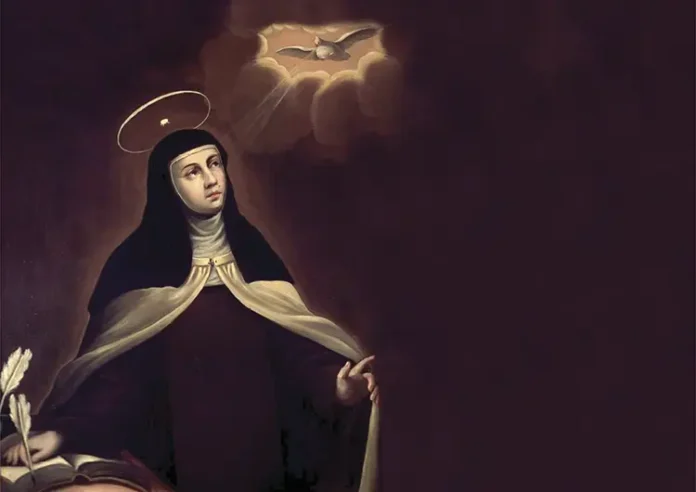
Indeed, the title of mystic immediately suggests to our imagination someone in ecstasy, a seer, or even a stigmatized person. However, such manifestations should more precisely be called extraordinary mystical phenomena.5
Theology enumerates several of them, including those of a cognitive or affective nature, such as visions, locutions, discernment of spirits, and burnings of love, and those of a bodily nature, such as stigmata, tears and sweat of blood, prolonged fasts, sleep deprivation, bilocation, levitation, and supernatural aromas, among many others.6
It is clear that the Church will always be very cautious in differentiating extraordinary mystical phenomena from any other situation of a pathological or preternatural kind. However, scientific data speaks frankly in favour of the real existence of such phenomena, against the convictions of the sceptics…
If we take, for example, a mystical saint who had the gift of inedia, that is, prolonged fasting, and compare them to someone endowed with only natural human capacities, we will soon find evidence of supernatural support. Science admits that a man can survive several weeks without eating. In the middle of the last century, Lord MacSwiney decided to stop eating in protest against English domination in Ireland; his life lasted seventy-three days! This is the farthest limit to which the natural can reach. However, it is known that St. Catherine of Siena went eight years without eating; St. Nicholas of Flüe, twenty years; and St. Lidwina of Schiedam, twenty-eight years…7
The “better part,” which will not be taken from us
After stating these facts alone, it seems easy to conclude that such extraordinary phenomena are not characteristic of every Christian. However, it is essential to understand that the mystical life is not limited to these resounding manifestations, nor are they even the most sublime aspect of Catholic spirituality. As proof of this assertion, one can consider that an impious man like Caiaphas prophesied, through inspiration, the redemptive Death of Our Lord Jesus Christ (cf. Jn 11:49-52), and the treacherous Balaam was given the power to prophesy, through revelation, the providential mission of the Hebrew people and even the birth of the Messiah (cf. Num 23–24).
God continues to converse with man living in the state of grace, no longer in the gardens of Eden, but within his own inner temple
The baptized person who retains the state of grace has something far superior to any of these extraordinary phenomena: the indwelling of the Holy Trinity in their soul. God continues to converse with humankind, no longer in the Garden of Eden, but within their own inner temple.
As seen in the preceding articles, sanctifying grace, the infused virtues, the gifts of the Holy Spirit, and actual graces constitute the supernatural organism that leads the soul to Christian perfection. This path is nothing other than the mystical life to which every baptized person is called, since the normal development of sanctifying grace leads to union with Christ, that is, to mysticism.
Provided that man does not fall into sin, he continually has the Divine Guest in his “dwelling,” enjoys His intimate friendship, and receives from Him the most precious teachings, like St. Mary Magdalene in Bethany, about whom Jesus Himself pronounced the sentence: “Mary has chosen the better part and it will not be taken from her” (Lk 10:42).
The mystical life of the Christian, which is the presence of the Blessed Trinity in his soul – with the gifts, the virtues, and the graces that accompany it – is in reality the “better part” that will not be taken from the baptized person. This is the inner paradise where he will always encounter God, until the day when, having been faithful to this gift, he will be received into heavenly Paradise and the Lord Himself will be his exceedingly great reward (cf. Gn 15:1) for all eternity! ◊
Those Who Ask, Receive!
Whatever is a true positive good is of itself desirable and we may ask it of God. And if it is licit for us to ask, to desire, and to put forth great efforts for the acquisition of health, knowledge, and sharpness of wit, so also it ought to be lawful […] to seek, desire, and strive for so superior a good as the health, knowledge, and penetration which the divine Spirit communicates (cf. 1 Cor 14:1).
There is not the least presumption in this if it is desired with the right intention, just as there is no presumption in the desire to receive Communion in order to please God and to nourish and fortify our souls. Presumption lies in desiring these things from motives of vainglory, and not when they are sought as an aid for our weakness, to establish us in humility and all the other virtues, to make us grow in the grace and knowledge of God and in all things, according to Jesus Christ, until we arrive at the fullness of perfect and truly spiritual men.
We already know that no one can be such unless he is animated, directed, and governed by the divine Spirit and greatly enriched by His precious gifts. […]
Although no one should attempt to place himself in that state to which he has not yet been called, much less attempt to fly without wings, yet all souls can and should ask that the gates be opened to them and should beg for wings like the dove – which are the precious gifts of wisdom and understanding – so that they may fly and be at rest. They should be assured that they will be filled with holy desires and that “everyone that asketh, receiveth, and he that seeketh, findeth; and to him that knocketh, it shall be opened” (Mt 7:8).
By the very fact that this state is of such great worth and that we are unable to attain it by our own efforts, we should beg for it with great insistence, saying with the Samaritan woman, “Lord, give me to drink of this water.” […] If it is not asked for ardently, that is only because it is not known or appreciated. “If thou didst know the gift of God… thou perhaps would have asked of Him, and He would have given thee living water… springing up into life everlasting” (Jn 4:10-15). […]
The divine Spouse is continually calling all souls and He is desirous of celebrating with them the banquet of the mystical nuptials (cf. Rv 3:20). If we do not cooperate with Him or if we make ourselves deaf to His invitations, the fault is ours. ◊
ARINTERO, OP, John G.
The Mystical Evolution. St. Louis – London:
Herder, 1951, v.II, p.384-389
Notes
1 Cf. AGAESSE, Paul; SALES, Michel. Mystique. La vie mystique chrétienne. In: Dictionnaire de Spiritualité. Paris: Beauchesne, 1980, v.X, col.1939-1951.
2 SECOND VATICAN COUNCIL. Lumen gentium, n.40.
3 CCC 2013.
4 CCC 2014.
5 Cf. TANQUEREY, Adolphe. Précis de Théologie Ascétique et Mystique. 6.ed. Paris-Tournai-Roma: Société de S. Jean L’Évangéliste; Desclée, 1928, p.932-967.
6 Cf. THURSTON, SJ, Herbert. Los fenómenos físicos de misticismo. San Sebastián: Dinor, 1953; BOUFLET, Joachim. Encyclopédie des phénomènes extraordinaires dans la vie mystique. Paris: Les Jardins des Livres, 2002-2015, v.I-II.
7 Cf. ROYO MARÍN, OP, Antonio. Teología de la perfección cristiana.11.ed. Madrid: BAC, 2006, p.845-846.