February 15 – 6th Sunday in Ordinary Time
“There is no need to state the obvious.” For centuries, this adage has often been uttered to attest to how redundant and superfluous it is to state what is evident. However, in this time of profound religious relativism and increasing spiritual insensibility, it is imperative to recall that the obvious must in fact be stated.
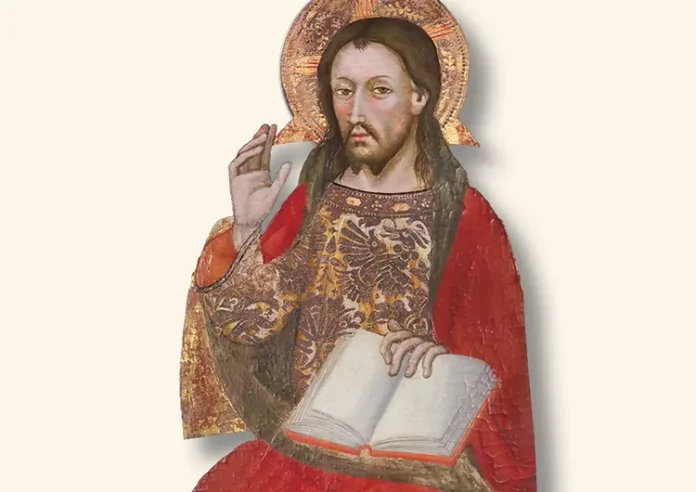
This is the context in which this Sunday’s Gospel presents us with one of the most forceful statements of the Divine Master, which well reminds us of one of those “obvious truths” that must be stated: “Let what you say be simply ‘Yes’ or ‘No’; anything more than this comes from evil” (Mt 5:37).
The early Christians were educated in this school of the “divine obviousness,” where yes meant yes, and no meant no. St. Paul writes to the Corinthians: “As surely as God is faithful, our word to you has not been Yes and No” (2 Cor 1:18). St. James also admonishes categorically: “let your yes be yes and your no be no, that you may not fall under condemnation” (Jas 5:12).
The language of Christ and His Mystical Bride has always been orderly and defined, affirming the immutable principles of the Faith in all their clarity and integrity. For this reason, the Holy Church “can never renounce the ‘the principle of truth and consistency, whereby she does not agree to call good evil and evil good.’”1
Furthermore, St. Augustine observes in one of his letters: “Truth is sweet and bitter. When sweet, it forgives; when bitter, it heals.”2 Contemporary man is not always willing to accept the bitter taste of truth, which often comes in the form of censure or rebuke. That is why he seems to fear not only the truth itself, but also the consequences that derive from obeying its precepts. It is often more convenient to ignore its existence than to explicitly refuse to follow it.
When cornered by evidence, many begin to defend a “third way” between the “yes” and the “no” proclaimed by the Divine Master. In the depths of their hearts, the indispensable coherence of truth is obscured in favour of a relativistic conception of morality and faith. There is no longer truth and falsehood, beauty and ugliness, goodness and evil; there is no longer any distinction between what comes from God or from the Evil One. And it is of them that the prophet Isaiah speaks: “Woe to those who call evil good and good evil, who put darkness for light and light for darkness, who put bitter for sweet and sweet for bitter!” (Is 5:20).
In these times in which we live, the Church must always present itself as the “the pillar and bulwark of the truth” (1 Tim 3:15). And Catholics must remember that it is not enough to avoid lying. They must also avoid half-truths, so as to not say “yes” with their lips and “no” with their actions. A half-truth is nothing more than a complete lie. Not deciding between God and the Evil One is already a decision. ◊
Notes
1 ST. JOHN PAUL II. Veritatis splendor, n.95.
2 ST. AUGUSTINE. Epistola 247, n.1.