December 7 – 2nd Sunday of Advent
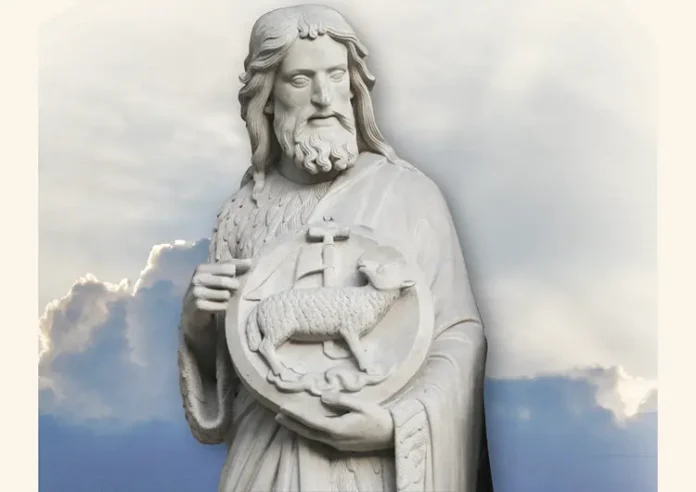
On this second Sunday of Advent, the figure of St. John the Baptist appears, in the writing of St. Matthew, preaching in the desert of Judea. He dressed roughly and ate wild honey and locusts, in contrast to the worldly customs of the time. Inhabitants of Jerusalem, Judea and beyond the Jordan sought him out to hear his preaching and to be baptized.
Despite his humble appearance, he was relentless against evil. Addressing the Pharisees and Sadducees, who mingled with the crowd to observe him, he warned: “You brood of vipers! Who warned you to flee from the coming wrath?” (Mt 3:7).
He so named them because they always begot more children of perdition and for perdition! St. Thomas1 explains that it is praiseworthy to suffer with patience the injuries done to us personally, but it is extremely wicked to excuse those committed against God.
How similar these fiery words are to the warnings pronounced by the Saviour against these same people, when He rebuked them: “You serpents, you brood of vipers, how are you to escape being sentenced to hell?” (Mt 23:33).
During Advent, the Precursor invites us to change our lives through vigilance, prayer, and penance. A radical and true interior conversion, not pharisaical and deceitful – that is, made up only of outward appearances – nor thirsty for privileges like that of the Sadducees, for it is useless to say that “we have Abraham as our father” (Mt 3:9) if we do not produce fruits of holiness.
John, that child who leapt for joy in the womb of his mother, Elizabeth, when he heard Mary’s voice (cf. Lk 1:44); John, whom Jesus said was the greatest among those born of women (cf. Mt 11:11); John, who declared himself unworthy to untie the straps of Our Lord’s sandals (cf. Jn 1:27); John, the divine messenger whose soul shone with so many virtues… how well we would do to imitate him in his humility.
St. Teresa of Jesus2 teaches us that humility consists in walking in truth, and St. Thomas3 affirms that it is completed by magnanimity. Without this, humility ceases to be real and becomes faintheartedness and even cowardice.
The Baptist did not cower before Herod Antipas, Tetrarch of Galilee, but rebuked him for his wickedness and sin, and for the love of truth he was martyred. When, at Salome’s request, his head was presented on a platter, from his half-closed eyes and his virginal lips still echoed the cry: “It is not lawful for you” (M 14:4).
Let us follow the example of the prophet of the Most High and love his teachings. Let us also be champions of the Holy Church without human respect, always defending the whole truth. Humble, vigilant, and with our lamps lit, let us wait for the Child God who is about to be born. ◊
Notes
1 Cf. ST. THOMAS AQUINAS. Summa Theologiæ. II-II, q.108, a.1, ad 2.
2 Cf. ST. TERESA OF JESUS. Moradas del castillo interior. Moradas sextas, c.10, n.8.
3 Cf. ST. THOMAS AQUINAS, op. cit., q.133, a.2.