March 8 – 3rd Sunday of Lent
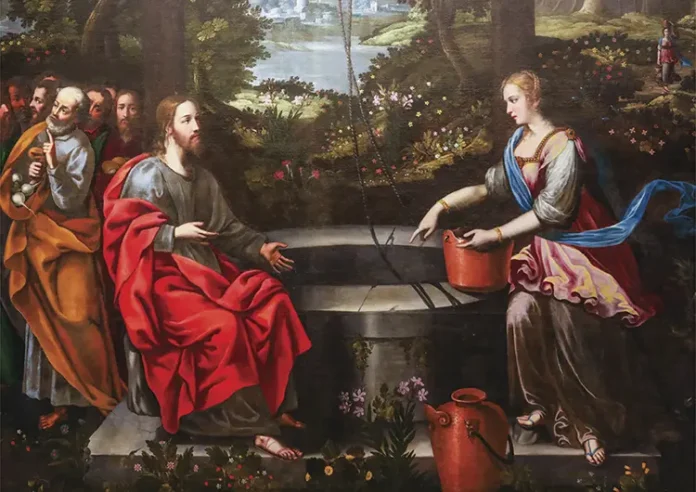
The Gospel tells us that it was around noon when Jesus, tired from His journey, sat down by Jacob’s well. Seeing a Samaritan woman approaching to draw water, He asked her, “Give me a drink.”
Given the hostility between Jews and Samaritans, and having recognized that Our Lord was from the chosen people, the woman was surprised that He addressed her. The Master then replied, “If you knew the gift of God and who is saying to you, ‘Give me a drink,’ you would have asked Him and He would have given you living water” (Jn 4:10).
After questioning Him about how He could give her water if He did not even have a bucket to draw it, the Samaritan woman heard Him reveal things about her life and understood that she was in the presence of the Messiah, hurrying to call other members of her people, who also believed in Him.
Stopping by Jacob’s well, Our Lord waited for the soul He wished to save to arrive, although that woman, by going to the place at a time when other people did not go there – so as not to cause scandal by her presence, since she lived in a state of sin – could not have imagined that the true Source of Life awaited her there.
How many of us, ashamed of our behaviour and forgetting that Jesus came into this world to enlighten those who walk in darkness (cf. Is 9:1), also doubt when He appears to satiate us!
The living water promised by the Divine Redeemer is that which quenches the thirst caused by worldly passions, which leads the soul to desire more and more from the source of sin, without ever satisfying its disorderly desires.
Sin attracts man who, always thirsty, murmurs against God, as the people of the Covenant once did against Moses: “Why did you ever make us leave Egypt? Was it just to have us die here of thirst?” (Ex 17:3). As if the blame for the consequences of our sins belonged to the Lord, and not to our evil actions!
St. Augustine rightly affirms: “Thou have made us for Thyself, O Lord, and our hearts are restless until they rest in Thee.”1 Thus, this Liturgy invites us to seek in the Fountain of Life the water that quenches the soul, rejecting the water of passions that corrupt the interior of man and distance him from eternal happiness.
Urged by the Divine Master to receive the water of life, the Samaritan woman was invited to abandon sin. Similarly, each of us, upon receiving the Redeemer, cannot nurture the desire to serve God and continue living in accordance with the spirit of the world.
Our great decision this Lent must be to reject sin, so that our thirst may be quenched by the living water. And, to reach it, it is enough to implore her who is our Mother, Mary Most Holy, who can lead us directly to the Fountain from which flows the water of eternal life. ◊
Notes
1 ST. AUGUSTINE. Confessionum. L.I, c.1, n.1.