


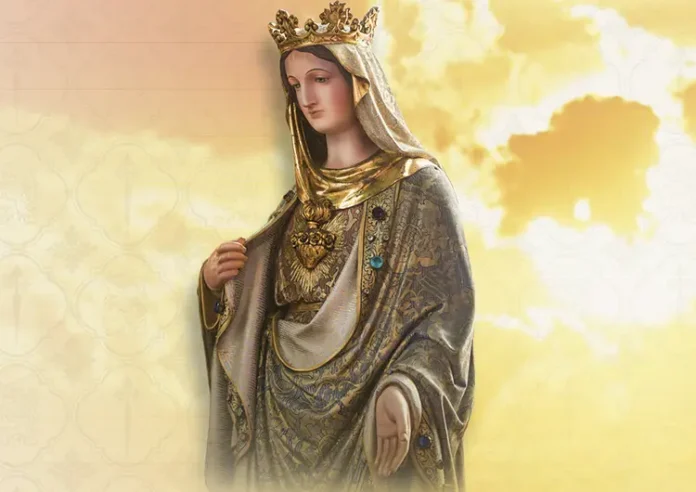
The writings of Sister Maria de Ágreda,1 in which she records the supernatural revelations she received, tell of many special concepts contained in the Book of Revelation, expressed symbolically and as yet undiscovered, concerning Our Lady’s relationship with the Apostles, especially St. John the Evangelist.
When the time comes for theologians to understand the mysteries of the Apocalypse in this regard, they will come to know the full treasure contained in Revelation, and the Magisterium of the Church will be able to exercise its authority in its fullness regarding this new panorama. Although this idea of Mary of Ágreda is not proven merely by her affirmation, there is nothing heterodox about it. There will presumably come a time when this will be fully disclosed, and then this knowledge will be completed.
Such a hypothesis is in line with what St. Louis Grignion de Montfort states regarding the progress of the mystery of grace. There is a devotion to Our Lady that existed throughout the ages which, at a certain point, began to take on greater significance, as desired by her. Devotion to the Blessed Virgin develops this mystery in souls, and it is its triumph that brings an end to the reign of the devil and establishes the true Reign of Mary.
There are certain conjectures – very orthodox, serious and sound, though not yet entirely clear – through which one can gain some understanding of this mysterious action of Our Lady in souls.
An inexhaustible source of compassion for the sinner
There was a time when I was reading about devotion to the Sacred Heart of Jesus and the Immaculate Heart of Mary – including encyclicals on the topic – in order to answer the following question: in essence, what is devotion to the Sacred Heart of Jesus and, extensively, to the Immaculate Heart of Mary? We know that the object of this devotion is the Heart as a part of His human body, or of her immaculate body, but it is, above all, a symbol of a spiritual nature. So, of what does the reality it represents consist?
There is a devotion to Our Lady that existed throughout the ages which, at a certain point, began to take on greater significance, at her own request
Briefly, devotion to the Sacred Heart of Jesus considers what we might call the spirit of Our Lord Jesus Christ, that is to say, His wisdom and holiness; in other words, a doctrine not merely as conceived, but as personified and lived. He manifests Himself as loving towards mankind, desiring to diffuse Himself, to attract, to win over. In the face of a sinful humanity, His greatest triumph is not justice, by which He sends the sinner to hell, but clemency, by which He redeems him. God’s greatest triumph lies in forgiving and converting.
Thus, we understand this aspect of the devotion, which is so prominent in popular piety and emphasized in numerous documents of the Holy Church: the Heart of Jesus as the source of mercy.
Concomitantly, we understand what the Immaculate Heart of Mary is.
The Hearts of Jesus and Mary: a new plenitude of graces
However, when one pays close attention to these two invocations, one notices certain intricacies in which some developments can already be sensed, but which have not yet been fully explained.
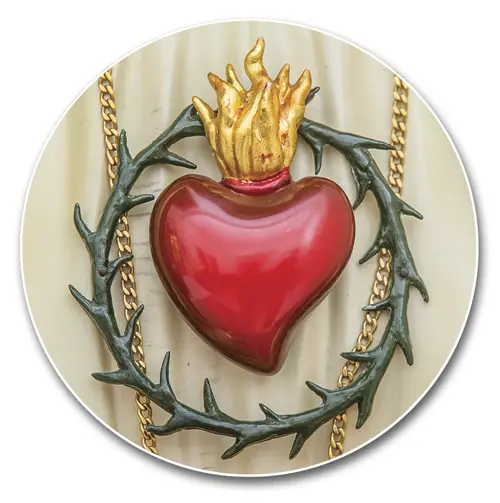
There is a kind of greater and more complete communication of Our Lord with those who venerate His Heart, than with those who worship Him in the other mysteries. Just as there is a fuller form of communication from Our Lady with those who venerate her Immaculate Heart.
Authors who write about these two devotions assert that they are intended for the latter times, the conclusion of the Church’s history, the final outpourings of mercy.
Devotion to the Immaculate Heart of Mary, intended especially for the latter times, brings with it a new form of clemency
Thus, drawing on the thought of St. Louis Grignion de Montfort, one gets the impression of an increase in grace that operates through wonders of benevolence, progressively and with greater intensity from the moment these two devotions were revealed to mankind. It is, therefore, a further step in the mystery of grace being manifested. It would seem that this new form of mercy has been directed towards a humanity in a state of extreme putrefaction– almost rendered unfit, due to vice, to actually attain holiness – and whose moral decay would indicate the proximity of the end of the world.
Our Lady’s merciful and transformative initiative
I see, within our Movement,2 in those who strive to be good, the struggle between a persistent grace – ineffably steadfast – and a vast array of opposing resistances: refusals, irresolution, and infidelities of every kind and degree.
Nevertheless, there seems to be a gradual victory of Our Lady, marked by the way people progress spiritually.
In my view, this would be inexplicable without this help given to the weak and the little ones, which corresponds to the motto of the Church of Philadelphia, in the Book of Revelation: weak, yet faithful (cf. Rev 3:8). It is a grace that sustains in faithfulness those who are very weak.
Upon the poorest and most crippled of humanity, continuous graces descend – the most undeserved – which, nevertheless, form a stream of undeniable virtue. So many cases of magnificent moral regeneration, in which one is transformed from a street urchin into the very model of piety and righteousness! It is impossible not to recognize an immense influx of grace, something which is above all supernatural, comparable to the great divine acts recorded in the history of the Church.
All of this – truly disproportionate to what is happening today – points to an immense grace, founded entirely on devotion to Our Lady. If our relationship with her were to diminish by even a single millimetre – if such things could be measured in millimetres – our Movement would fall apart right now. I have the impression that there would not be enough time to finish my conference. Such is the degree to which fidelity and perseverance spring from our bond with the Mother of God and thrive on her encouragement.
In this sense, there is such mercy that I am led to consider this as a sign foretelling the superabundant aid which, in the Reign of Mary, will bind men to her. Today, naturally, this bond is still in its infancy, in its first stirrings, in its initial movements, but it exists.
Union with the Virgin Mary is to the other virtues as the engine is to the airplane, drawing everything else along in its wake: it is the “engine” of all virtues; when in motion, everything moves forward.
“The Little Way” and the dawn of the Reign of Mary
I feel I cannot conclude this talk without saying a few words about St. Therese of the Child Jesus and “the Little Way”, in connection with this.
The “little way” is the path by which the humble souls of a decadent humanity will be rescued by mercy and led to holiness
St. Therese of the Child Jesus, in her Story of a Soul, makes several references to a new intensity of God’s love, so powerful that it will gather those who are small, insignificant, and weak in various senses of the word, and lead them to holiness.
It is, then, a greater outpouring of divine grace, victoriously, of God’s benevolence in being content with little to accomplish great things; a greater manifestation of the efficacy of supernatural aid, drawing greatness from that which is small.
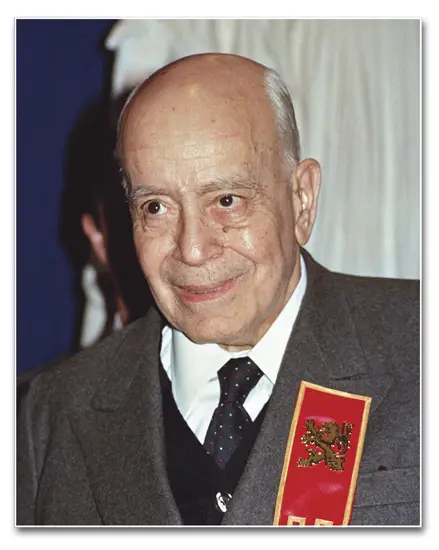
St. Therese states that she offered herself as a victim in a holocaust to God’s merciful love, to consecrate a path that countless souls should follow. She, in Heaven, would spend her eternity showering the earth with a rain of rose petals.
It is clear that the rose petals signify temporal graces, as she grants them, but they are meant to lead to spiritual ones; that greater love of God of which we have just spoken.
There must be a connection between her hope for the growth of God’s merciful love and the dawn of the Reign of Mary, even though St. Therese did not express herself in those terms.
The progressive advance of merciful love in the world should be made along the path opened by her. Her death is certainly related, in some way, to its outpouring.
The “little way” turns out to be, in various regards ̶ when studied in all its aspects – the path by which the little souls of a decadent humanity are rescued by mercy and led to holiness. It is, therefore, the specific spirituality of those who wish to be children and slaves of Our Lady, and to progress in virtue.
I have the impression that some of Our Lady’s most chosen souls, from Elijah until the end of the world, received and will receive this grace. But from individual cases it will become a collective phenomenon when the Reign of Mary comes. ◊
Taken, with adaptations
for written language, from:
Conference. São Paulo, 11/7/1967
Notes
1 A Conceptionist nun, mystical writer and abbess of the convent of Ágreda, in Spain (1602-1665).
2 Dr. Plinio founded the Brazilian Society for the Defence of Tradition, Family and Property in 1960.

