…what the Ministries of Lector and Acolyte are?
Wise and maternal, the Catholic Church establishes different states and degrees in the service of sacred worship. In this hierarchy of functions, the clergy – Bishops, priests, and deacons – who have received the Sacrament of Holy Orders, occupy a prominent place.
However, some baptized and confirmed lay people who are deemed worthy may be instituted in the ministries of lector and acolyte. Minister, in Latin, designates a servant, helper, or representative; and ministerium, an office or service.
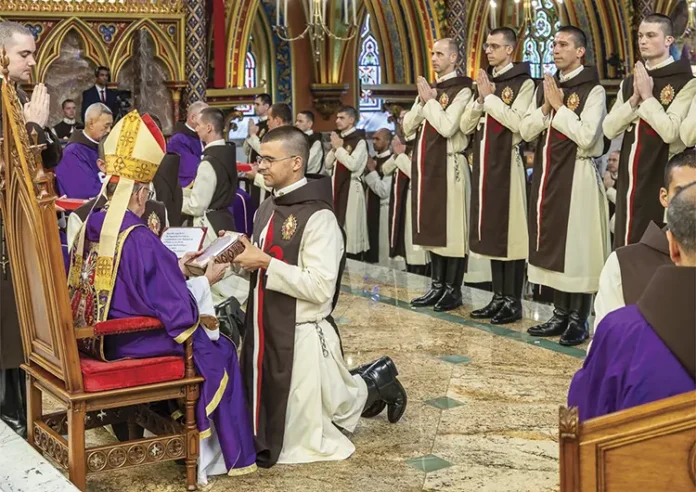
In the Latin Rite Church, this institution is made through a liturgical act presided over by the Bishop or, in clerical institutes, by the legitimate superior. In this way, without entering the clerical state, they can perform auxiliary functions of a liturgical-religious nature.
Thus, the lector is responsible for proclaiming the Word of God in liturgical celebrations. Among other functions, he may read from Sacred Scripture, with the exception of the Gospel; in the absence of the psalmist, recite the Psalm; and, when there is no deacon, formulate the intentions of the prayer of the faithful. It is also his responsibility to lead the singing, instruct the faithful to receive the Sacraments properly and, when appropriate, prepare those who, on a temporary basis, are to read Sacred Scripture during liturgical acts.
The acolyte, in turn, is instituted to serve the priest and assist the deacon at the altar. He is permitted to distribute Communion as an extraordinary minister and, in special circumstances, to expose and repose the Blessed Sacrament. He is also responsible for instructing altar servers and other faithful who make up the liturgical retinue.
It is worth noting that every candidate to the diaconate must be previously instituted as lector and acolyte. ◊
…that Our Lady left her portrait in Italy?
Christian tradition tells us that in Rossano, in the region of Calabria, Italy, in the 7th century a venerable monk, an ardent devotee of the Virgin Mary, requested and obtained permission from the emperor to convert the cave where he lived into a church dedicated to the Mother of God.
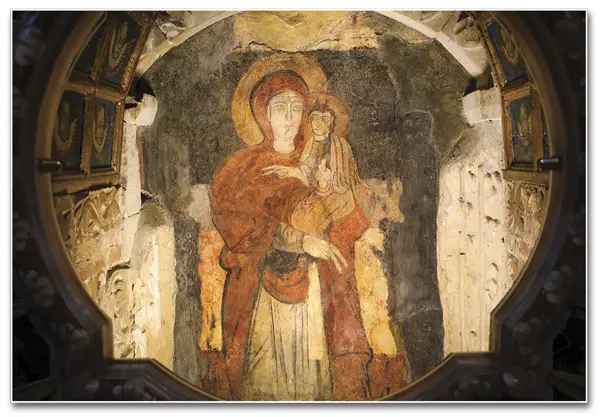
Once all the preparations for construction had been made, Governor Philippicus ordered skilled artists from Byzantium to paint an image of Our Lady at the back of the cave. However, something unexpected happened: the workers noticed that the image painted during the day inexplicably disappeared at nightfall.
Annoyed, the governor appointed a guard to watch over the cave and see what was happening there. One night, he saw a noble Lady approaching, dressed in white, carrying a beautiful Child in her arms. Enchanted, the sentry allowed them to enter the cave so that they could pray. After some time, the soldier entered the sanctuary and was surprised to see the image of the Lady and the Child magnificently stamped in the place where the artists had previously worked.
The governor was notified, and everyone rushed to the cave and, filled with admiration, exclaimed: “Acheropita!”, from the Byzantine Greek αχειροποίητα, meaning “not painted by human hands”. And so the portrait was named: Our Lady of Acheropita. ◊