


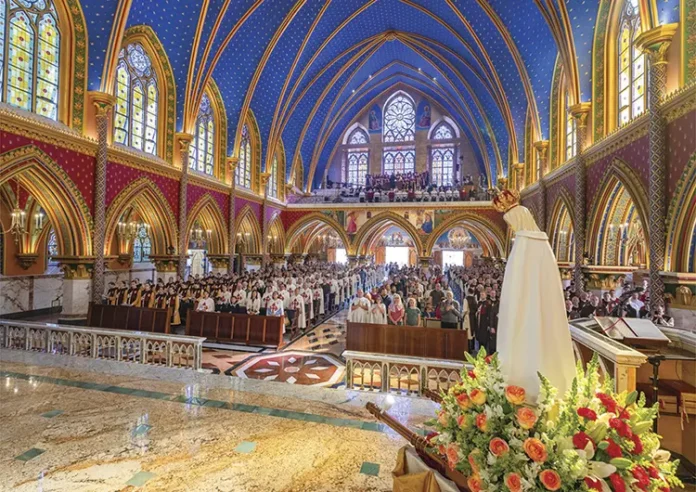
…why Saturday is dedicated to Our Lady?
The consecration of Saturday to Mary is a tradition that dates back to the Carolingian era, when Charlemagne’s learned advisor, Alcuin of York († 804), proposed two votive Masses in honour of the Blessed Virgin to be celebrated on that day. From the 11th century to the present day, the custom of dedicating Saturday to Our Lady has gained the consensus of the clergy and the enthusiasm of the faithful. And no wonder.
Genesis tells us that God “blessed the seventh day and hallowed it” (2:3); and what creature was, like Mary, so blessed by the Lord? The Creator rested on the Sabbath; and where did Jesus rest for nine months, if not in the womb of the Virgin Mother?
In that most pure womb, Eternal Wisdom chose to dwell, according to the words of Scripture, which the Church puts on Mary’s lips: “He that made me, rested in my tabernacle” (Eclo 24:12). Thus constituted as the way by which God came to us, the Queen of the Universe became, under yet another title, the Lady of the Sabbath: just as the Sabbath leads to Sunday, so too is She the sure way that leads us to Christ.
Above and beyond these reasons is the fact that on the Sabbath after the Passion, the Blessed Virgin alone kept intact her faith in the Resurrection of her Divine Son. The Mother of Jesus was the only one who, on that night of darkness and unbelief, fully represented the Church, ensuring that it would be marked by a Marian aspect from its very inception. ◊
…why Latin is the official language of the Church?
In the first community of believers in Jerusalem, the Liturgy was probably celebrated in Aramaic, while Hebrew was reserved for reading the Holy Scriptures. After the fall of the Holy City in 70 AD and the expansion of the Church throughout the Roman Empire, Koine Greek became the lingua franca among Christians.
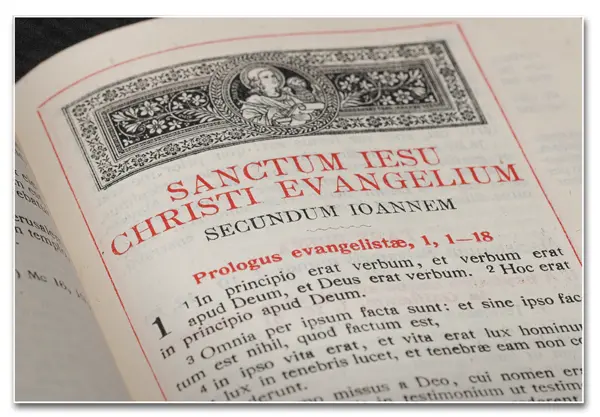
In the third and fourth centuries, the Greek language lost prestige due to the weakening of Eastern influence on the Church. On the other hand, official ecclesiastical documents began to be written in Latin, such as the letters from Pope St. Cornelius to St. Cyprian of Carthage around the year 250.
The use of Latin in the Liturgy was slow and gradual. Its preponderance grew with the Vulgate Bible, a version commissioned by Pope St. Damasus I of St. Jerome.
With the fall of the Western Roman Empire in 476, classical Latin lost its relevance, but remained in the Liturgy and in official documents. So-called ecclesiastical Latin remained the lingua franca in the West throughout the Middle Ages, not only in ecclesiastical writings but also in secular ones, coexisting with the Neo-Latin languages.
Despite the decline in the teaching and use of Latin in the 20th century, it remains “the living language of the Church” (ST. JOHN XXIII. Veterum sapientia: AAS 54 [1962], 134) and the official language of the Latin rite, as prescribed by the Second Vatican Council, although, for pastoral reasons, the vernacular may be given a more prominent place (cf. Sacrossanctum concilium, n.36).
The new general regulation of the Roman Curia, promulgated by Leo XIV in November 2025, continues to stipulate that, as a rule, its documents should be written “in Latin or in another language” (art.50, §1).
Finally, because Latin does not belong to any nationality, it better expresses the universality of the Church. And because it is no one’s mother tongue, it is unaffected by the natural changes of the languages in use. Paradoxically, because it is “dead,” it has become immortal. ◊