…that the name “Eve” was not chosen by chance?
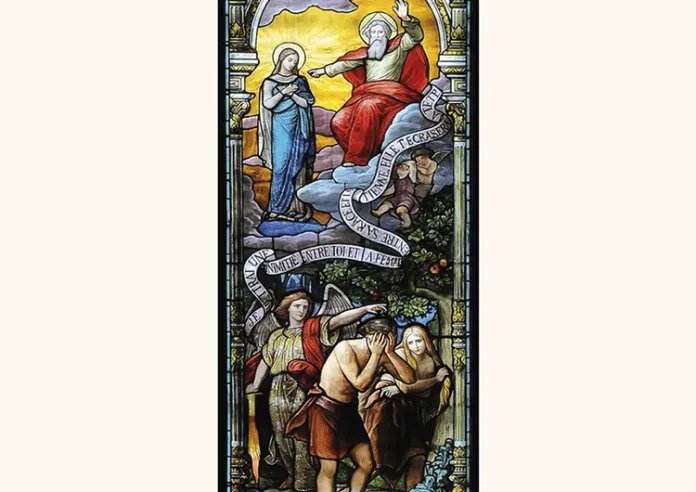
The reader may well have felt a certain perplexity upon encountering the passage in Genesis: “The man called his wife’s name Eve, because she was the mother of all living” (3:20). After all, what is the connection between “the mother of all the living” and the name “Eve”?
In Western culture, the choice of a name often reflects various desires: to honour an ancestor, follow a trend, or simply to satisfying a preference for a particular sound… In Eastern traditions, however, the custom of giving new family members a symbolic name – such as Swan or Wall – endures to the present day, expressing the hopes parents place in that soul.
This custom prevailed in biblical times, as seen in the aforementioned Genesis passage. Eve – Hawwah in Hebrew – means life. The verse could thus be read: “Adam named his wife Life,” indicating her mission as a mother. In the Greek Septuagint version, this meaning was preserved by translating Eve as ζωή (life). In the Latin Vulgate, however, the name was merely transliterated from the Hebrew, giving rise to similar versions in Romance languages and other modern tongues.
Upon leaving Paradise, Adam seemed to remind his wife that, even in their harsh exile, the divine covenant remained alive in the promise of offspring. Far from being merely the cause of death, she was – in the divine plan – Eve: a prefiguration of the one who would be called the New Eve, Mary, who was destined to give birth to humanity to true Life. ◊
…that the dead can be helped by the living?
Charity is the bond that unites the members of the Church and, as the Apostle proclaimed, it “never ends” (1 Cor 13:8), for “neither death, nor life […] will be able to separate us from the love of God in Christ Jesus” (Rom 8:38-39). This is true in a special manner regarding those who have already passed from this life to the next, since, in a certain way, they remain ever alive in the memory of their loved ones (cf. St. Thomas Aquinas, Summa Theologiæ, Suppl., q.71, a.2).
For this reason, even those undergoing purification in the fire of Purgatory can benefit from the aid of the living. How? According to St. Thomas (cf. ibid., a.9), there are three principal works that most benefit the deceased, on account of their intimate link to the communication of the virtue of charity.
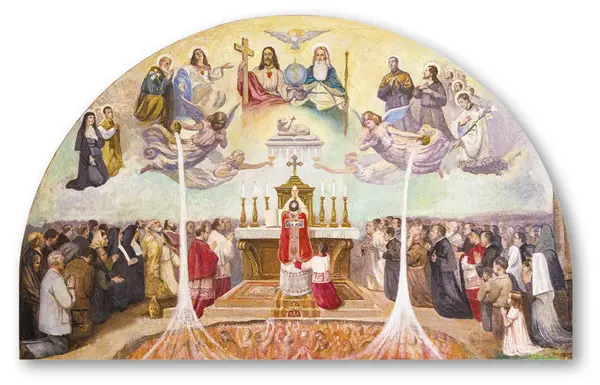
First is the Blessed Eucharist, the Sacrament of unity containing Him in whom the entire Church is grounded. Hence the importance of requesting Mass intentions for the deceased. Almsgiving also plays a role, as it is an expression of charity. Finally, prayer is of preeminent value, for it entails a more direct relationship with the person for whom one prays.
In short, the suffrages offered by the living do not transform the state of the dead from misery to beatitude; rather, they contribute primarily to mitigating the expiatory punishment through the charity and intention directed towards them.
Let us not, then, miss the opportunity to help the souls of those who have gone before us, bearing in mind this indisputable truth: one day, we too may depend on the aid of the members of the Church Militant who, through charity and the Communion of Saints, are united with the Church Suffering. ◊