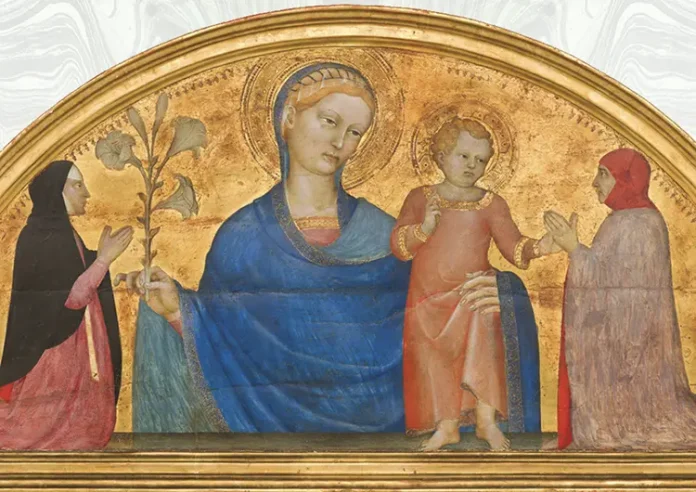
“Omnia est gratia” – Everything is grace in the supernatural realm. Man, left to his own devices, is incapable of taking a single step towards effective union with God. Without divine assistance, there is no conversion, spiritual progress, or holiness, and it is impossible to merit eternal life (cf. Summa Theologiæ, I-II, q.109, a.5).
Faced with this truth, an inevitable question arises: how to reconcile the efficacy of divine grace with human freedom?
The difficulty is accentuated, to a great extent, by pride and liberalism, increasingly prevalent in our time. The world preaches absolute self-sufficiency, subjective happiness, moral relativism, and unlimited liberty as if they were supreme goods; conversely, it considers all external help, correction, or suggestion an evil, especially when inspired by Catholic doctrine and the eternal Law.
Thomistic theology, however, rejects such notions. For the Angelic Doctor, free will is a precious gift, ordained by God for good and capable of being guided by others for the acquisition or improvement of virtue and the rejection of sin (cf. Summa Theologiæ, I-II, q.1, a.1; II-II, q.33, a.1). Thus, not all influence combats free will, except if it results from coercion. In this case, the act would not proceed from a voluntary movement, but from an external imposition: “Coercion is nothing other than the imposition of a certain violence” (De veritate, q.22, a.5). God, however, acts within souls without coercion. Through grace He inspires, assists, and strengthens them in virtue.
Does His omnipotence compromise free will? No! When God moves the human will, He causes one inclination to succeed another, in such a way as to remove the first and preserve the second. Thus, the direction in which He leads the will does not contradict the new inclination of the soul. There is, therefore, no violence or repression (cf. De veritate, q.22, a.8).
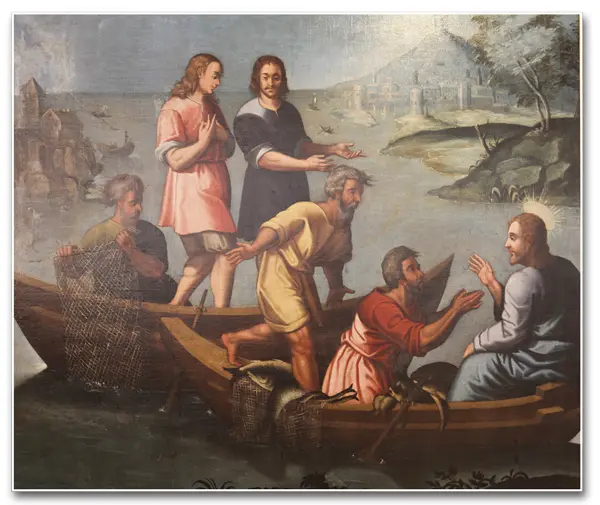
“The calling of St. James the Apostle” – Museum of León (Spain)
Let us take, with Aquinas, the example of a stone. By natural gravity, it is inclined downwards. Maintaining this inclination, if it is thrown upwards it will suffer violence. However, if God removes the inclination of gravity from the stone and imparts to it that of lightness, then the upward movement will no longer be coercive. In the same way, He acts on the human will effectively, but without constraining it, according to the wise and loving designs of His Providence (cf. De veritate, q.22, a.8).
Consequently, the soul justified by grace is more inclined towards the heavenly heights, without suffering aggression. God does not suppress or diminish our freedom. On the contrary! Although free will consists of our capacity to choose, when we opt for truth, goodness, and beauty, we conquer true freedom, the “glorious liberty of the children of God” (Rom 8:21). To choose error, evil, and ugliness is to succumb to the slavery of the sons of Satan.
Thus Msgr. João taught us: “Choosing good is the ultimate freedom!”1 ◊
Notes
1 CLÁ DIAS, EP, João Scognamiglio. Homily. São Paulo, 31/12/2007.