Wednesday of the 33rd Week in Ordinary Time
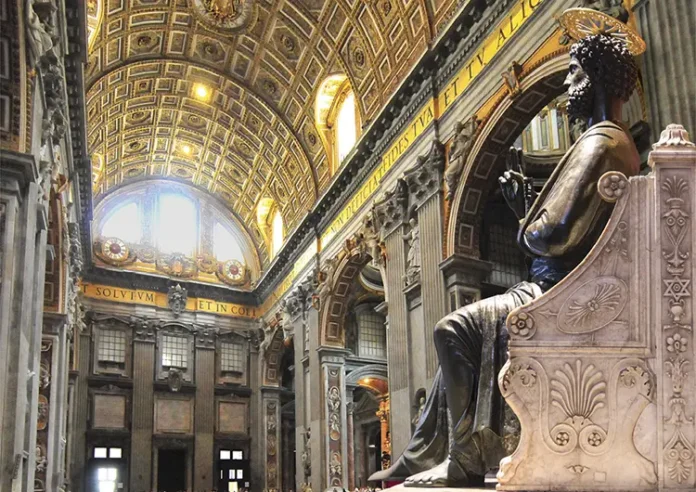
Optional Memorial of The Dedication of the Basilicas of Sts. Peter and Paul. The former was built by Constantine on Vatican Hill, over St. Peter’s sepulchre, and the latter was erected on the Via Ostiensis, over the tomb of St. Paul. The dedication of these two basilicas was added to the Roman Calendar by St. Pius V in 1568.
Mass Readings
First Reading – Revelation 4:1-11
Eleazar, one of the foremost scribes, a man of advanced age and noble appearance, was being forced to open his mouth to eat pork. But preferring a glorious death to a life of defilement, he spat out the meat, and went forward of his own accord to the instrument of torture, as people ought to do who have the courage to reject the food which it is unlawful to taste even for love of life. Those in charge of that unlawful ritual meal took the man aside privately, because of their long acquaintance with him, and urged him to bring meat of his own providing, such as he could legitimately eat, and to pretend to be eating some of the meat of the sacrifice prescribed by the king; in this way he would escape the death penalty, and be treated kindly because of their old friendship with him. But Eleazar made up his mind in a noble manner, worthy of his years, the dignity of his advanced age, the merited distinction of his gray hair, and of the admirable life he had lived from childhood; and so he declared that above all he would be loyal to the holy laws given by God. He told them to send him at once to the abode of the dead, explaining: “At our age it would be unbecoming to make such a pretense; many young people would think the ninety-year-old Eleazar had gone over to an alien religion. Should I thus pretend for the sake of a brief moment of life, they would be led astray by me, while I would bring shame and dishonor on my old age. Even if, for the time being, I avoid the punishment of men, I shall never, whether alive or dead, escape the hands of the Almighty. Therefore, by manfully giving up my life now, I will prove myself worthy of my old age, and I will leave to the young a noble example of how to die willingly and generously for the revered and holy laws.” Eleazar spoke thus, and went immediately to the instrument of torture. Those who shortly before had been kindly disposed, now became hostile toward him because what he had said seemed to them utter madness. When he was about to die under the blows, he groaned and said: “The Lord in his holy knowledge knows full well that, although I could have escaped death, I am not only enduring terrible pain in my body from this scourging, but also suffering it with joy in my soul because of my devotion to him.” This is how he died, leaving in his death a model of courage and an unforgettable example of virtue not only for the young but for the whole nation.
Responsorial Psalm – Ps 150:1b-2, 3-4, 5-6 (R.1b)
R. Holy, holy, holy Lord, mighty God!
Praise the LORD in his sanctuary,
praise him in the firmament of his strength.
Praise him for his mighty deeds,
praise him for his sovereign majesty. R.
Praise him with the blast of the trumpet,
praise him with lyre and harp,
Praise him with timbrel and dance,
praise him with strings and pipe. R.
Praise him with sounding cymbals,
praise him with clanging cymbals.
Let everything that has breath
praise the LORD! Alleluia. R.
Gospel – Lk 19:11-28
While people were listening to Jesus speak, he proceeded to tell a parable because he was near Jerusalem and they thought that the Kingdom of God would appear there immediately. So he said, “A nobleman went off to a distant country to obtain the kingship for himself and then to return. He called ten of his servants and gave them ten gold coins and told them, ‘Engage in trade with these until I return.’ His fellow citizens, however, despised him and sent a delegation after him to announce, ‘We do not want this man to be our king.’ But when he returned after obtaining the kingship, he had the servants called, to whom he had given the money, to learn what they had gained by trading. The first came forward and said, ‘Sir, your gold coin has earned ten additional ones.’ He replied, ‘Well done, good servant! You have been faithful in this very small matter; take charge of ten cities.’ Then the second came and reported, ‘Your gold coin, sir, has earned five more.’ And to this servant too he said, ‘You, take charge of five cities.’ Then the other servant came and said, ‘Sir, here is your gold coin; I kept it stored away in a handkerchief, for I was afraid of you, because you are a demanding man; you take up what you did not lay down and you harvest what you did not plant.’ He said to him, ‘With your own words I shall condemn you, you wicked servant. You knew I was a demanding man, taking up what I did not lay down and harvesting what I did not plant; why did you not put my money in a bank? Then on my return I would have collected it with interest.’ And to those standing by he said, ‘Take the gold coin from him and give it to the servant who has ten.’ But they said to him, ‘Sir, he has ten gold coins.’ He replied, ‘I tell you, to everyone who has, more will be given, but from the one who has not, even what he has will be taken away. Now as for those enemies of mine who did not want me as their king, bring them here and slay them before me.’” After he had said this, he proceeded on his journey up to Jerusalem.
Featured Saints
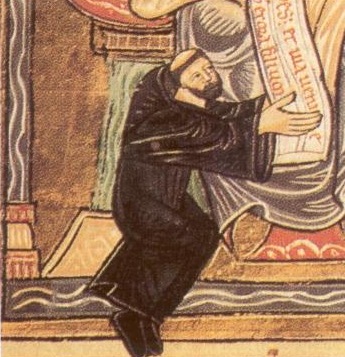
St. Odo of Cluny, abbot (†942). Second Abbot of Cluny; he restored monastic discipline in many monasteries of France and Italy.
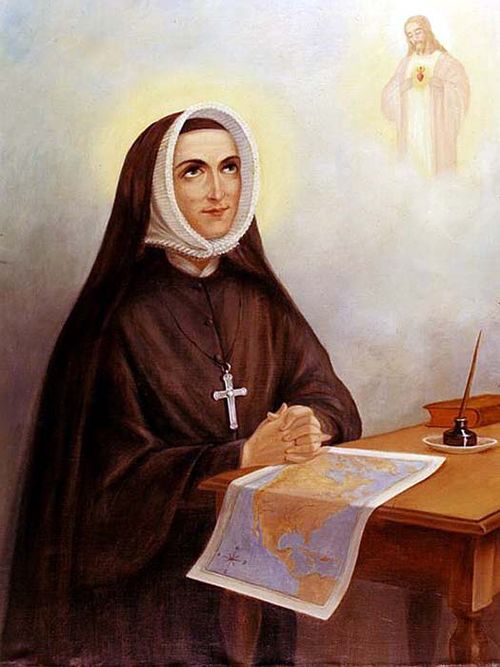
St. Rose Philippine Duchesne, virgin (†1852). Optional Memorial in USA. Born in Grenoble, France, she entered a monastery in 1788, but the Reign of Terror dispersed its members in 1792. After many years of struggles, she became a disciple of St. Madeleine-Sophie Barat, foundress of the new Society of the Sacred Heart, dedicated to teaching. Under her direction, St. Rose emigrated to the United States as a missionary, and opened several schools there. She died in St. Charles, Missouri at the age of 83.
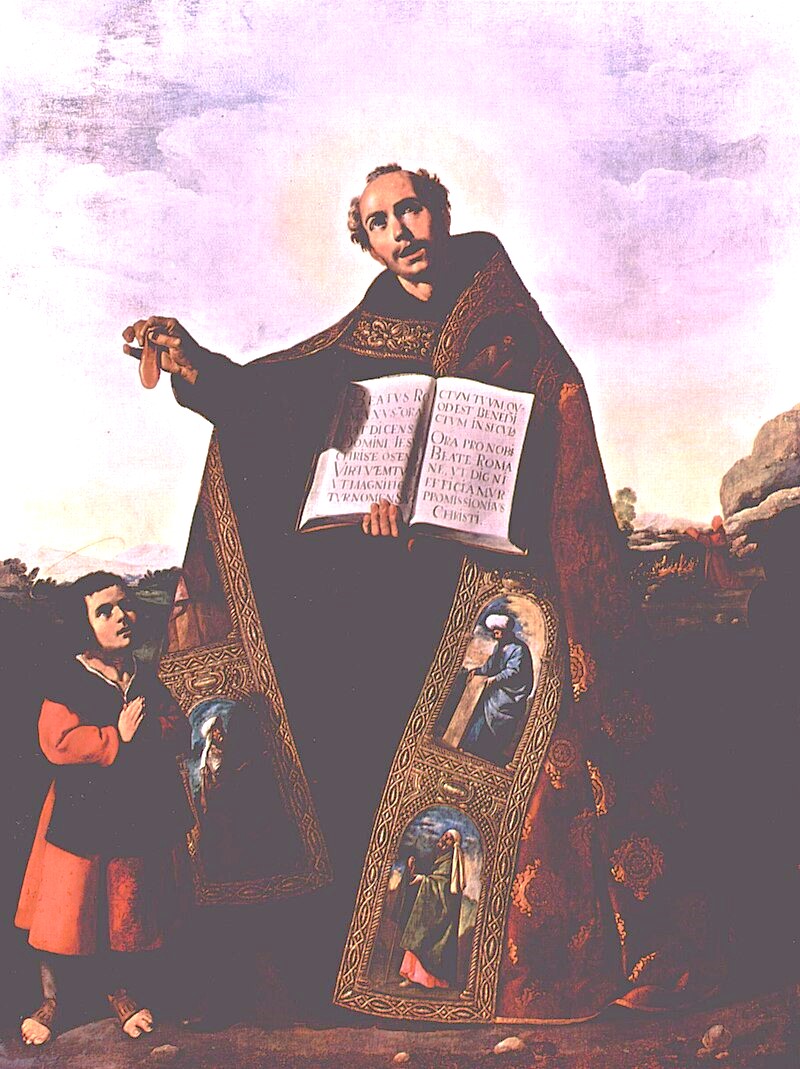
St. Romanus, martyr (†303). Deacon of Caesarea who exhorted the Christians of Antioch to persevere in the Catholic Faith, when he observed them approaching idols. For this reason, he was tortured and strangled to death.
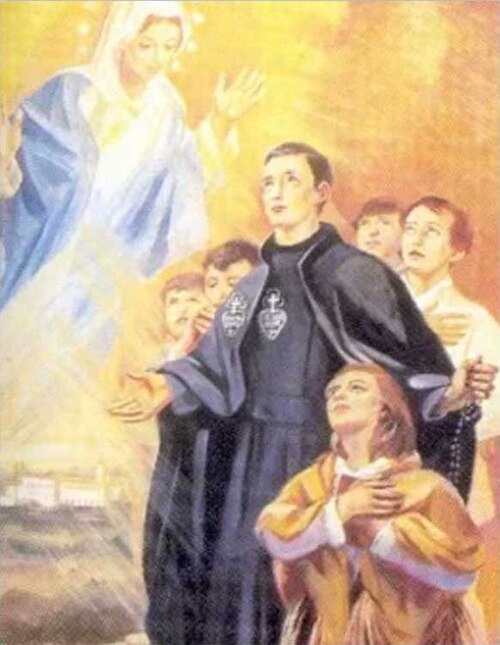
Blessed Grimoald of the Purification Santamaria, religious (†1902). Passionist brother who became mortally ill while preparing for priestly ordination. He died a holy death at 18 years of age in Ceccano, Italy.
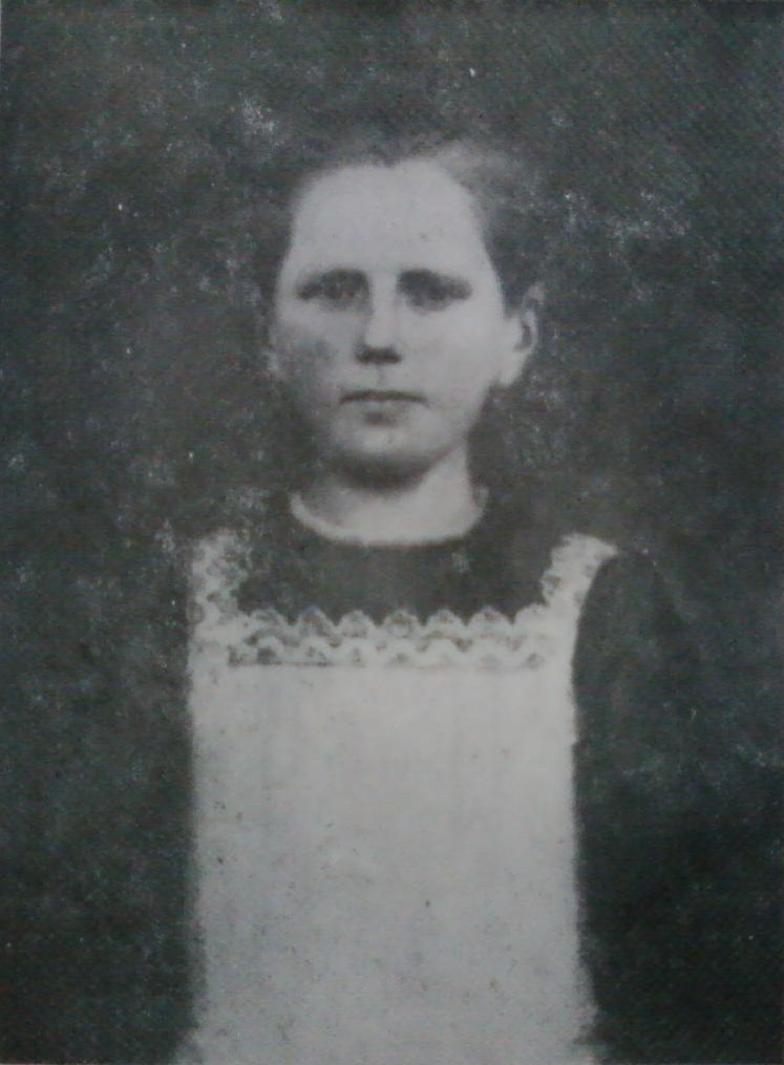
Blessed Carolina Kózka, virgin and martyr (†1914). Catechist from the parish of Zabawa, Poland. She was killed at 16 years of age, during the First World War, while resisting a Russian soldier who attempted to violate her chastity.
Image gallery