Memorial of St. Cornelius, Pope and St. Cyprian, Martyrs
St. Cornelius, Pope (+253) and St. Cyprian, bishop (+258), martyrs. St. Cornelius fought zealously for the unity of the persecuted Church. He was banished from Rome under Emperor Gallus and died a martyr in exile in Civitavecchia. St. Cyprian, as Bishop of Carthage, dedicated himself to the organization of the Church in Africa. Great orator and master of moral theology, he figures among the Patristic writers of the early Church, one of the first defenders of the Primacy of Peter.
Mass Readings
First Reading – 1 Cor 12:31-13:13
Brothers and sisters: Strive eagerly for the greatest spiritual gifts. But I shall show you a still more excellent way. If I speak in human and angelic tongues but do not have love, I am a resounding gong or a clashing cymbal. And if I have the gift of prophecy and comprehend all mysteries and all knowledge; if I have all faith so as to move mountains, but do not have love, I am nothing. If I give away everything I own,
and if I hand my body over so that I may boast but do not have love, I gain nothing. Love is patient, love is kind. It is not jealous, love is not pompous, it is not inflated, it is not rude, it does not seek its own interests, it is not quick-tempered, it does not brood over injury,
it does not rejoice over wrongdoing but rejoices with the truth. It bears all things, believes all things, hopes all things, endures all things.
Love never fails. If there are prophecies, they will be brought to nothing; if tongues, they will cease; if knowledge, it will be brought to nothing. For we know partially and we prophesy partially, but when the perfect comes, the partial will pass away. When I was a child, I used to talk as a child, think as a child, reason as a child; when I became a man, I put aside childish things. At present we see indistinctly, as in a mirror, but then face to face. At present I know partially; then I shall know fully, as I am fully known. So faith, hope, love remain, these three; but the greatest of these is love.
Responsorial Psalm – Ps 33:2-3, 4-5, 12 and 22 (R.12)
R. Blessed the people the Lord has chosen to be his own.
Give thanks to the LORD on the harp;
with the ten stringed lyre chant his praises.
Sing to him a new song;
pluck the strings skillfully, with shouts of gladness. R.
For upright is the word of the LORD,
and all his works are trustworthy.
He loves justice and right;
of the kindness of the LORD the earth is full. R.
Blessed the nation whose God is the LORD,
the people he has chosen for his own inheritance.
May your kindness, O LORD, be upon us
who have put our hope in you. R.
Gospel – Lk 7:31-35
Jesus said to the crowds: “To what shall I compare the people of this generation? What are they like? They are like children who sit in the marketplace and call to one another, ‘We played the flute for you, but you did not dance. We sang a dirge, but you did not weep.’ For John the Baptist came neither eating food nor drinking wine, and you said, ‘He is possessed by a demon.’ The Son of Man came eating and drinking and you said, ‘Look, he is a glutton and a drunkard, a friend of tax collectors and sinners.’ But wisdom is vindicated by all her children.”
Featured Saints and Commemorations
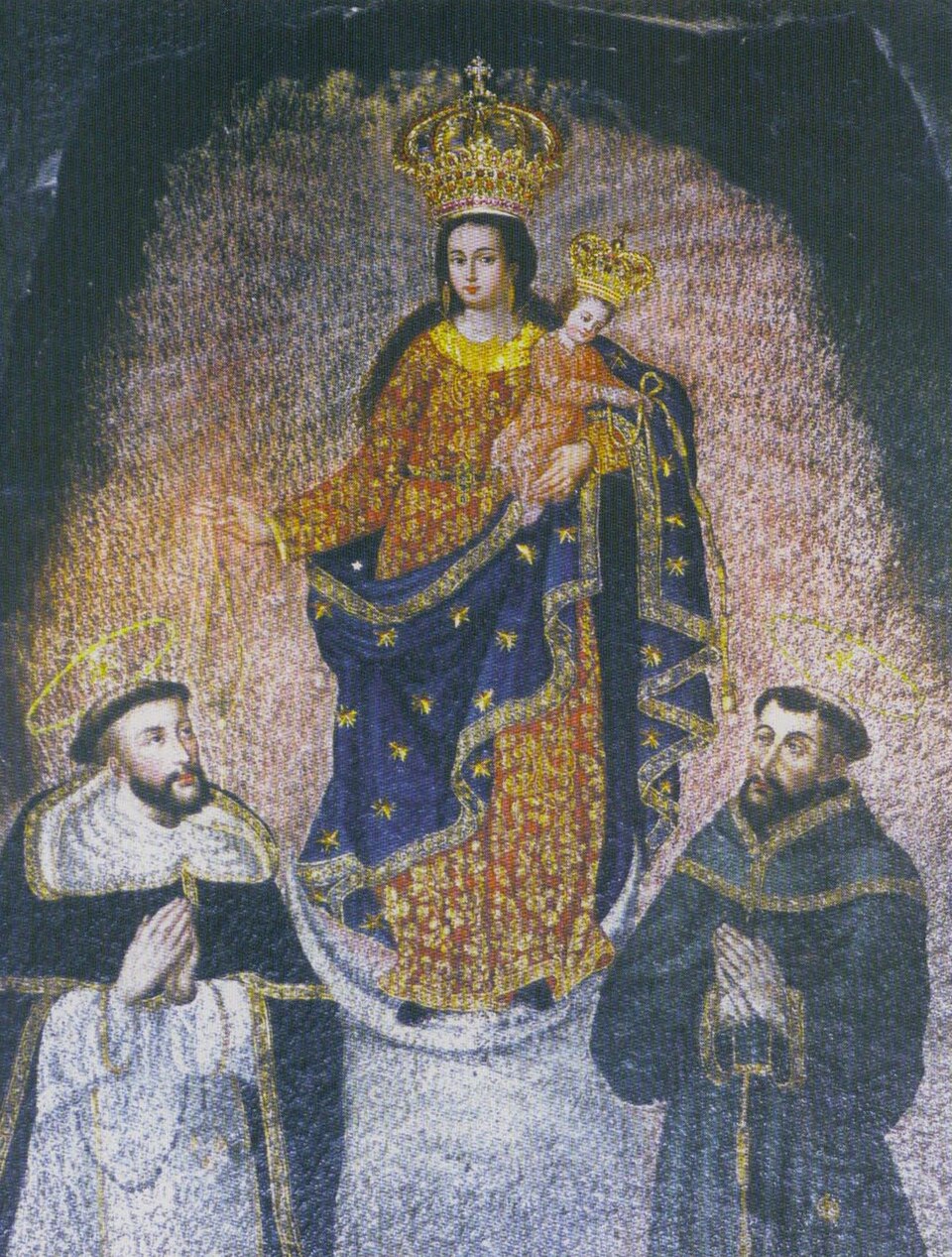
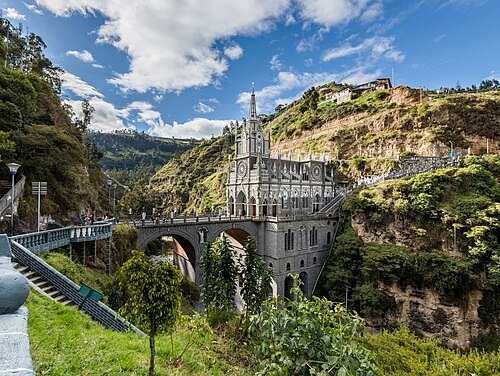
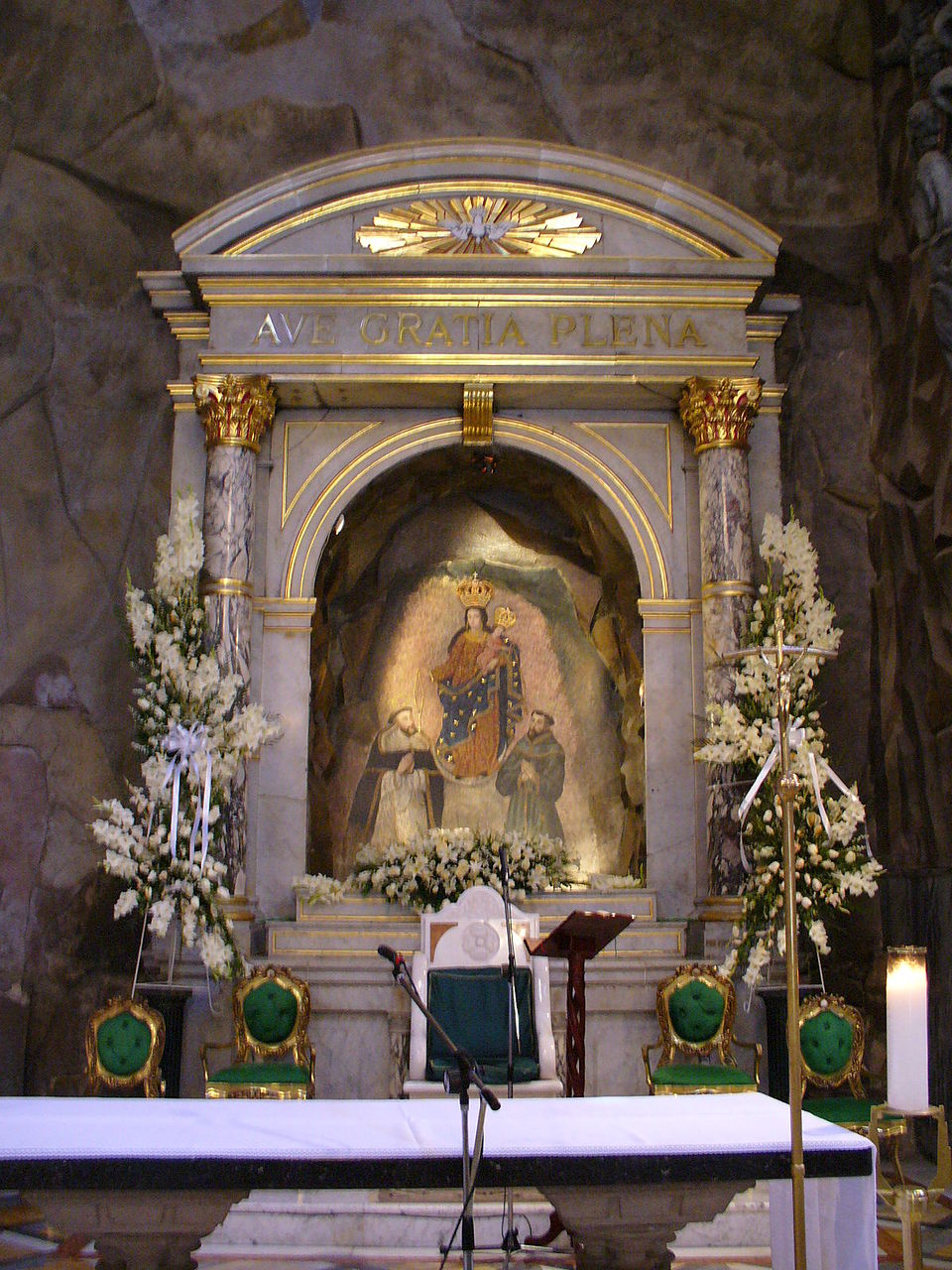
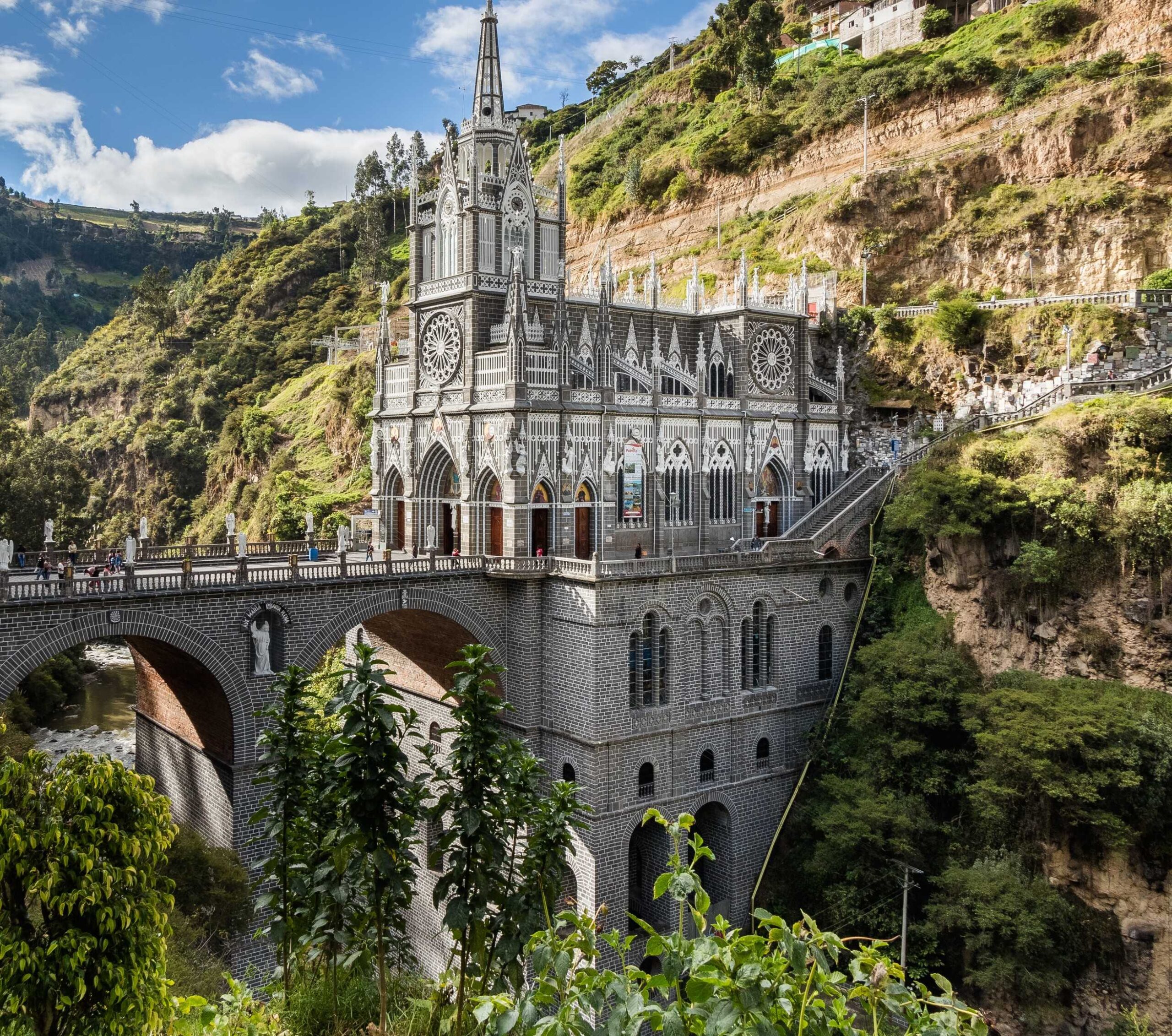
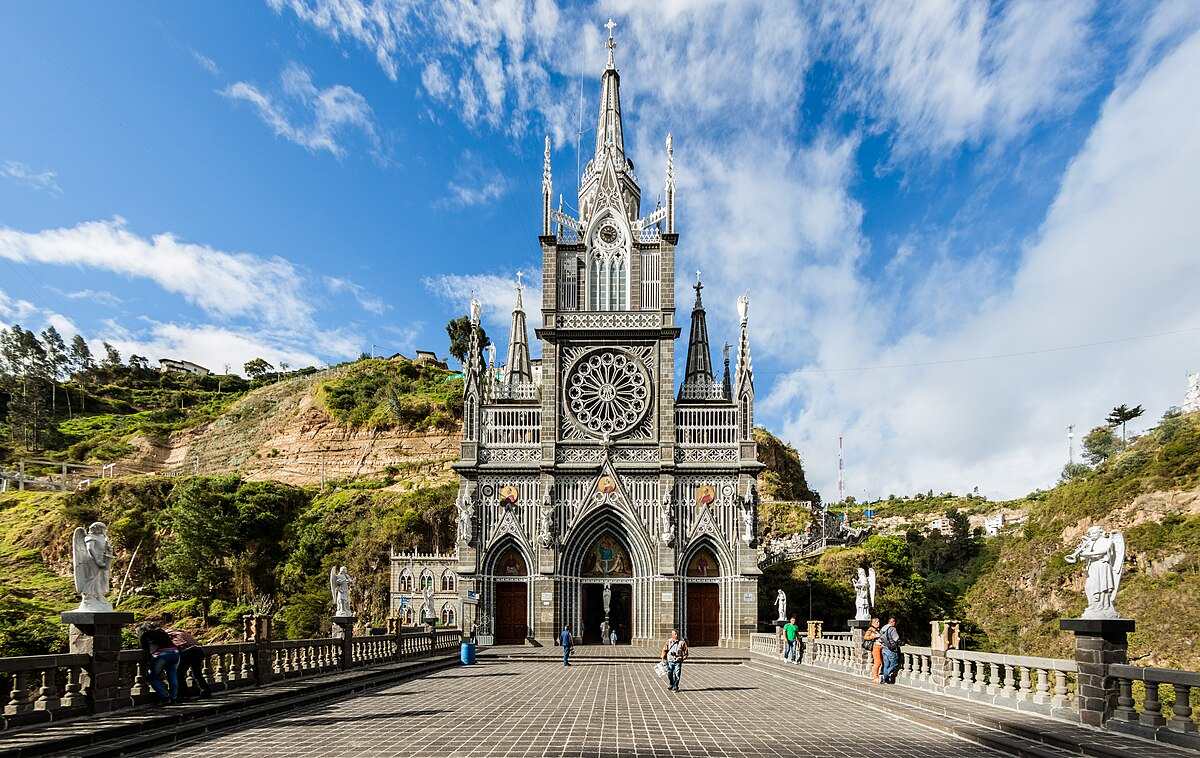
Our Lady of Las Lajas (Colombia) A magnificent, miraculous image of Our Lady and the Child Jesus, pictured together with Saints Dominic and Francis, found at the Sanctuary of Las Lajas, a basilica located in the southern Colombian department of Nariño, in the municipality of Ipiales, Colombia. The image is miraculously impressed on rock, within a former grotto on the mountainside, now transformed into a sanctuary in Her honor.
St. Ludmila, martyr (†921). Duchess of Bohemia, baptized by St. Methodius. She dedicated herself to works of charity, building churches and spreading the Faith. On account of her religious influence in the education her her grandson, the future ruler St. Wenceslaus, St. Ludmilda was murdered by her daughter-in-law.
St. Ninian of Galloway, bishop (†c. 432). Of British origin, he led the Picts of southern Scotland to embrace the Faith, becoming the first Bishop of Galloway.
St. Vital, abbot (†1122). He renounced earthly posts and founded a monastery in Savigny, France, where he gathered many disciples.
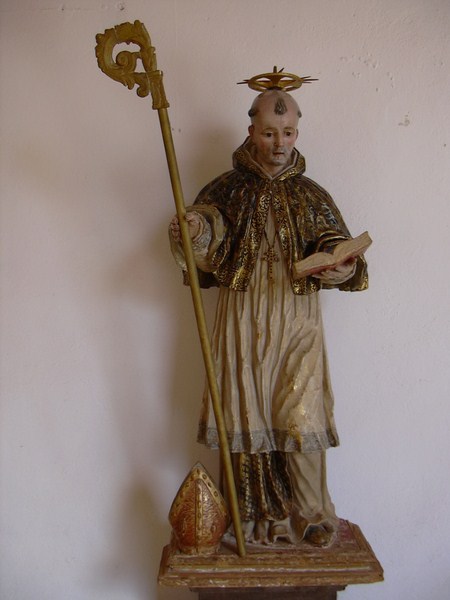
St. Martin of Finojosa, bishop and abbot (†1213). Abbot of the Cistercian monastery of St. Mary of Huerta, Spain, he was ordained Bishop of Sigüenza, where he strove to reform the clergy.
St. John Macias, religious (†1645). Dominican lay brother who for many years carried out humble offices in the monastery of Lima (Peru), excelling in piety and charity. His projects for the assistance of the needy were adopted in other Latin-American countries.
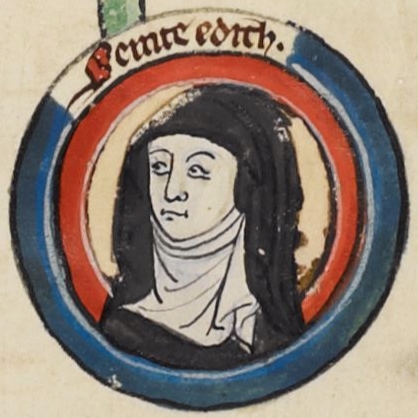
St. Edith of Wilton, virgin (†984). Daughter of King Edgar of England, she consecrated herself to God from a young age at the monastery of Wilton, where she was outstanding for her humility and abnegation, repeatedly declining to accept the office of abbess.
St. Euphemia, virgin and martyr (†c. 303). For her Faith, she bore cruel torture unto death in Chalcedon, present-day Turkey.
Photo gallery