


The modern world, so devoid of symbols, leadership and beauty, in which everything depends on machines and cybernetics, makes people much more animalistic than spiritual, prone to caring only about what affects them personally or their pockets, and to acting solely on the basis of their attachments and feelings.
The idea of sacrifice seems to have been banished from the mind of modern man.
Each one of us, as well, living in this age of atheism in which God is forgotten, may be easily led to be much more interested in concrete things, rather than the consideration of the more elevated perspectives of the supernatural world.
If we are not careful, we go to Mass and attend the Liturgy as a brute would watch a spectator event, when in reality, the divine and august moment of the Holy Sacrifice is that which is most important and excellent, and is the true apex of our day.
A treasure of graces at our disposal
The minds of all Angels and all men are incapable of comprehending the greatness of the Sacrifice of Calvary, which was established two thousand years ago for the first time and is renewed every day, in a bloodless manner, across the world. So, to not take advantage of this treasure of graces that the Redeemer has won is a fault by omission!
All of us who are Christians have a share, through Baptism, in the priesthood of Our Lord Jesus Christ. Therefore, when we attend the Eucharistic Celebration, it is a good custom to unite ourselves to the mystery that will take place and, at the moment when the priest prepares the offerings and elevates the host and the chalice to be consecrated, to offer to God the Father, through Jesus Himself and through the intercession of Mary Most Holy and our Guardian Angel, the Most Precious Blood of His Son, soliciting the benefits of this sacrifice for the good of the Church and souls, as well as for our personal salvation and perseverance, for our ideals and objectives, for the fulfillment of our mission and for our loved ones.
Everything that Our Lord bought by suffering on the Cross can be obtained with a single Mass! There is nothing that cannot be achieved with it, provided that the intentions are good.
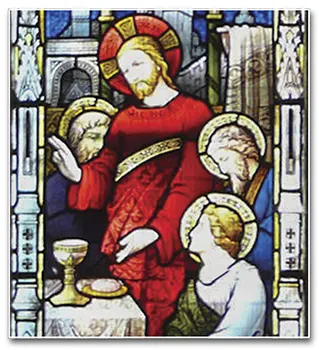
We must remember this truth several times during the day, from the moment we wake up in the morning until the moment we close our eyes to sleep at night, praying that even the beating of our hearts, our inhaling and exhaling, the blood that circulates through our veins and the cells that are renewed, in short, everything that occurs in our organism, may be in union with this generous sacrifice, whose effects are infinite.
Sacrifice and priesthood in pagan religions and in Israel
Together with this important reality of sacrifice – which springs from the natural law existing in every human being and was common even among the peoples of antiquity, including in the most barbaric religions – we encounter the fundamental figure of the priest, for sacrifice and priesthood are correlative.
In the Encyclical Ad catholici sacerdotii, Pope Pius XI writes, in sober but very elevated and literary language: “In fact, priests are to be found among all peoples whose customs are known, […] They may, indeed, be in the service of false divinities; but wherever religion is professed, wherever altars are built, there also is a priesthood surrounded by particular marks of honour and veneration.”1
In the Old Testament, when the Israelites left Egypt after four hundred and thirty years of slavery, the institution of the Levitical priesthood was born at the very origin of the Hebrew religion, established by Moses according to divine guidance.
God, who created man with body and soul, knows that principles and doctrine alone are not enough to move him. What really compels him is example, which, affecting his tendencies, favours the practice of the Law.
Therefore, in addition to the prophet who warned and showed the way, and to whom the Commandments were given, written on stone tablets, there had to be a priest to represent the people before the Lord and to represent the Lord before the people, interceding and offering sacrifices with the extraordinary power of intercession guaranteed by God Himself, so as to obtain help and strength to observe the Law.
And we see that, in order to give the Israelites a clear notion of the greatness of the priesthood, God commanded Moses to constitute Aaron as priest, adorning him and clothing him with highly symbolic insignia, which easily recalled his image as intercessor.
When he sacrificed animals – lambs, goats, pigeons, or oxen – offering them to God in atonement, and then collected the blood in a recipient and sprinkled it on the assembly with a hyssop branch, the gesture signified to this people of coarse customs that the offerings made by the priest opened God’s heart to bless them and to obtain the forgiveness of sins.
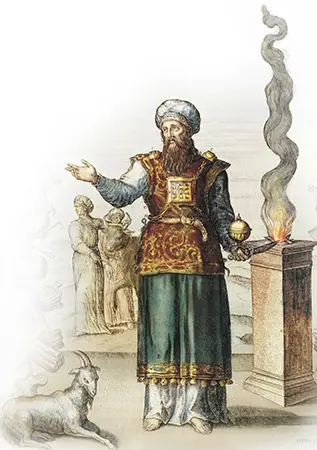
Thus, all this symbolism was to prepare souls for the appearance of the High Priest. And those victims, sacrificed for centuries, accustomed them to understand the One who was to come, who would be the Victim par excellence, and whose redeeming Blood would buy the salvation of all.
Priest, Mediator, and Victim
In the natural religions, society chose some of its members to offer sacrifices to appease the “deities”. But from the moment God deigned to found His Church, He Himself established the order of its priesthood and chose its Priest.
When the government of a state needs an ambassador in another country, it chooses someone from its own nation for this task, because a foreigner, who does not have native blood, cannot represent the homeland. In the same way, since it is the priest’s office to be a mediator between God and men,2 he must necessarily belong to the human race, because it would not be fitting for an Angel to exercise the priestly function.
For the same reason, the title of Priest is not attributed to the Father or the Holy Spirit, but to the Incarnate Word, begotten by the Father from all eternity and sent by Him to earth.
In fact, as God, the Son could not offer a sacrifice to the Father, since both are equal, as St. Thomas Aquinas3 explains. But by coming down from Heaven and taking on human nature, He became the perfect Mediator, entirely capable of being the Pontiff par excellence, since, as both Man and God, there is no one superior to Him!
If in the Old Testament the priest had to offer burnt offerings and expiatory sacrifices both for the sins of the people and for his own faults, Our Lord Jesus Christ brought this ritual to perfection by offering Himself as a Victim of infinite value, who honours His Father permanently and atones for the sins of all humanity.
Christ became, both in Heaven and on earth, the true Lamb of God, sacrificed for the salvation of men. As St. Thomas4 demonstrates, it is for this reason that the Father rejected the burnt offerings of the Old Law, for to perform the pre-figurative rites in the presence of the one perfect, pure and spotless Sacrifice was no longer relevant.
Here we see the importance of Our Lord not having a human personality, for if He did, it would be a mere man who would die and not God, and therefore Redemption would not take place, since His humanity, strictly speaking, could not atone for the offences committed against the Creator.
The symbology of the Mosaic priesthood helped to prepare souls for the appearance of the High Priest and Victim par excellence
However, by the grace of union, Christ’s human nature is worthy of adoration and, as a result, any action of His, however small, has infinite value and would have been enough to free the whole world from the state of damnation resulting from sin.
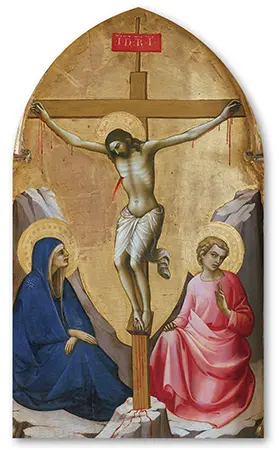
The Saviour conceived something so great that it is beyond any angelic or human conception: He became incarnate to die on the Cross and redeem us, when a simple gesture, a tear or a smile from Him would have been enough to bring about Redemption, wipe away the stain of sin and even to pardon us the punishment we deserved! How much more, then, did Our Lord do for us by giving all His divine Blood!
Mary’s dignity, superior to the priesthood
Now, from what moment on did Jesus Christ become the Priest and the Mediator?
From the moment Our Lady said, “Behold, I am the handmaid of the Lord; let it be to me according to your word” (Lk 1:38) and an extraordinary miracle took place: the Holy Spirit covered her and, by the work of this same Spirit, the process of gestation of the Son of God began. That is, when she conceived and the Soul of Our Lord was infused into her womb, Jesus was anointed Priest with the holy “oil of gladness” (Ps 45:7), offering in advance the Sacrifice of His own life. And that is why He is called the Christ.
Therefore, by giving her “Fiat” in the mystery of the Annunciation, Our Lady cooperated in a certain way in this anointing,5 through which the history of the Redemption of the human race began. There, hidden in Mary’s virginal womb and sanctifying His own Mother even more, Jesus made His first priestly prayer, as intercessor before God for men.
Jesus took flesh to die on the Cross and redeem us; His priesthood began with His conception and was consummated in His Passion, Death and Resurrection
We see, then, the great relationship that exists between Our Lady and priests, for, being the Mother of the High, True and Only Priest, She is also the Mother of all others who are linked to Jesus Christ for all eternity.
However, it is important to remember that, through her Divine Motherhood, Mary is inserted in a relative way into the hypostatic order – which is the union of human nature with divine nature – and therefore stands above the plane of grace to which the seven Sacraments belong, including that of Holy Orders.6
Therefore, Mary’s dignity as Mother of God is incomparably superior to that of the priest. She never received the Sacrament of Holy Orders – reserved by the Divine Master for men – but was associated by Christ with the work of salvation. Our Lady has an intrinsic part in the redemptive sacrifice, while the priest is limited to reproducing it in an extrinsic and purely instrumental way when celebrating Holy Mass.7
The consummation of the sacrifice took place at the Resurrection
Our Lord was therefore a Priest from the moment of His conception and, above all, at the moment He was born. Later, when He was presented in the Temple to fulfil the Law, when He returned there at the age of twelve to debate with the doctors, and when He began His public life, He was constantly serving as an intermediary between the people and God. Knowing human weakness, “except for sin” (Heb 4:15), in Himself, Jesus had compassion on those who, recognizing their own weakness, sought His intercession with the Father. There was not a single person who approached Him asking for forgiveness whom He did not grant it, or even take the initiative to offer it to them without their having asked for it.
When the time of His Passion came, He allowed Himself to be arrested and bound, scourged, crowned with thorns, buffeted, spat upon and spurned in favour of Barabbas. Finally, He accepted to carry the Cross and be crucified, to die and be buried… But on the third day, He resurrected Himself!
In the Old Law, when animals were sacrificed as an offering to the Lord, part of the victim had to be consumed by the priest and the other part given to the one offering it, to be eaten by him and his family. God had established this to show His acceptance of the feast offered and to make the people participate in it.
However, in the case of a sacrifice of atonement, it was necessary to burn the offering, for reparation required consumption by fire.
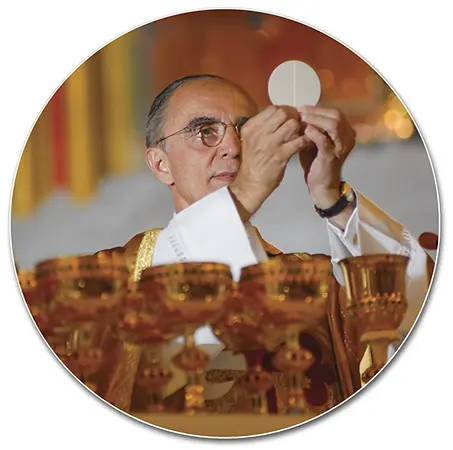
Now, since the sacrifice of Our Lord was an atonement, it would seem necessary that His Body should deteriorate according to the normal laws of fallen nature… But we know that this did not occur. His Death took place by the separation of His Body and Soul, but both remained united to the divinity, by the grace of union, and there was no destruction.
It is because of this Mediator and the His perfect oblation that the Father showers us with blessings and with all the graces that Jesus has in Himself
Thus, the consummation of the redemptive sacrifice took place at the moment of the Resurrection, because then everything that was subject to suffering and death disappeared from the Body of Chris; He left on earth what pertains to it, to assume the glory that is of Heaven, in accordance with His Soul, which had been in the beatific vision from the first instant of the Incarnation. Jesus had denied His Body this glory in order to suffer crucifixion.
Having risen, He ascended into Heaven and opened the doors of eternal beatitude for us. Now seated at the right hand of the Father, He continues, as High Priest, to intercede for men and to present our sacrifices and prayers.
It is because of this Mediator, and the perfect oblation He made, that the Father showers us with blessings and distributes to us all the graces that Jesus has in Himself as a treasure.
God cannot desire evil for us; on the contrary, He only desires our good! So it suffices to not place obstacles for Him to lead us to the highest perfection! ◊
Excerpts from oral expositions given
between 1992 and 2010
Notes
1 PIUS XI. Ad catholici sacerdotii, n.8.
2 Cf. ST. THOMAS AQUINAS. Summa Theologiæ. III, q.22, a.1.
3 Cf. Idem, q.26, a.2.
4 Cf. Idem, I-II, q.103, a.3.
5 On this point, Alastruey expresses himself as follows: “Mary, by her free consent, cooperated in the institution or priestly consecration of Christ […]. She gave the subject of the consecration, conceived in herself, and offered the place or temple where it should take place: her virginal womb, as a sanctuary consecrated especially for this purpose. Grimal, in this regard, states: ‘The Incarnation is nothing other than the ineffable ordination of Jesus’” (ALASTRUEY, Gregorio. Tratado de la Virgen Santísima. 4.ed. Madrid: BAC, 1956, p.612).
6 In this regard, the Dominican Merkelbach states: “Surpassing sanctifying grace and glory, Divine Motherhood necessarily surpasses the other graces, that is, gratis datæ graces and other dignities, in particular the priesthood itself” (MERKELBACH, OP, Benito Enrique. Mariología. Bilbao: Desclée de Brouwer, 1954, p.107).
7 “Mary had her own unique participation in the Sacrifice of the Cross, as befitted the Mother of God […]; and therefore, She cannot be denied a participation in such priestly power that places her under the supreme priesthood of Christ and above the ministerial and hierarchical priesthood” (ALASTRUEY, op. cit., p.617).